We were shocked this morning to find our Crew bear has gone missing! We made poster and asked around school to see if anyone has seen him!
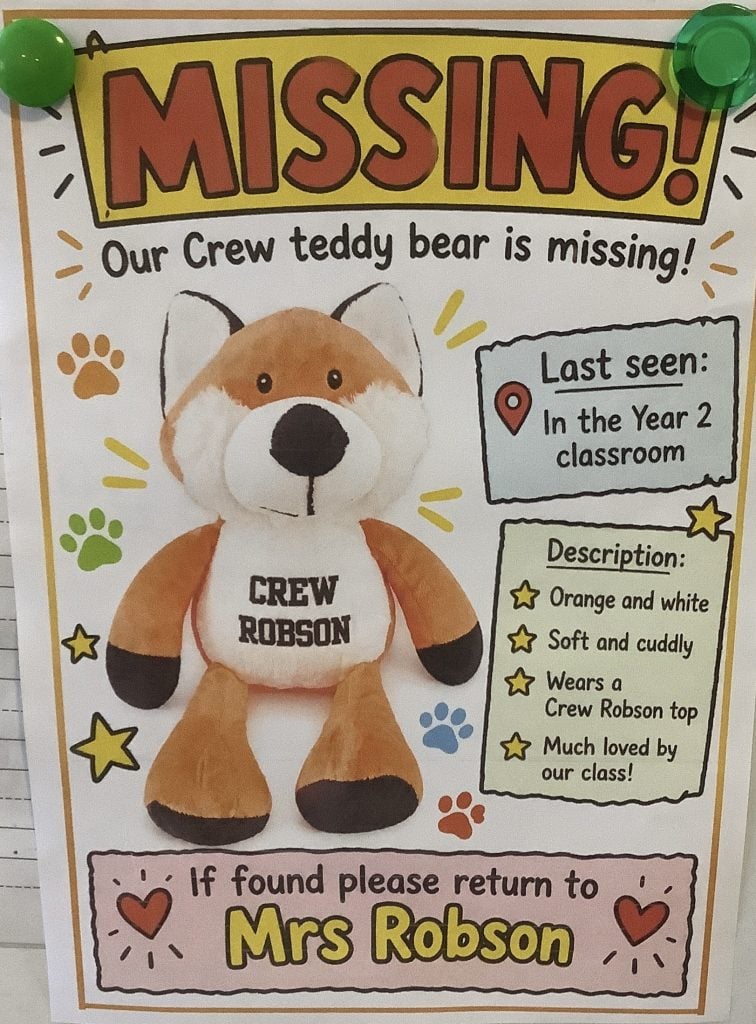
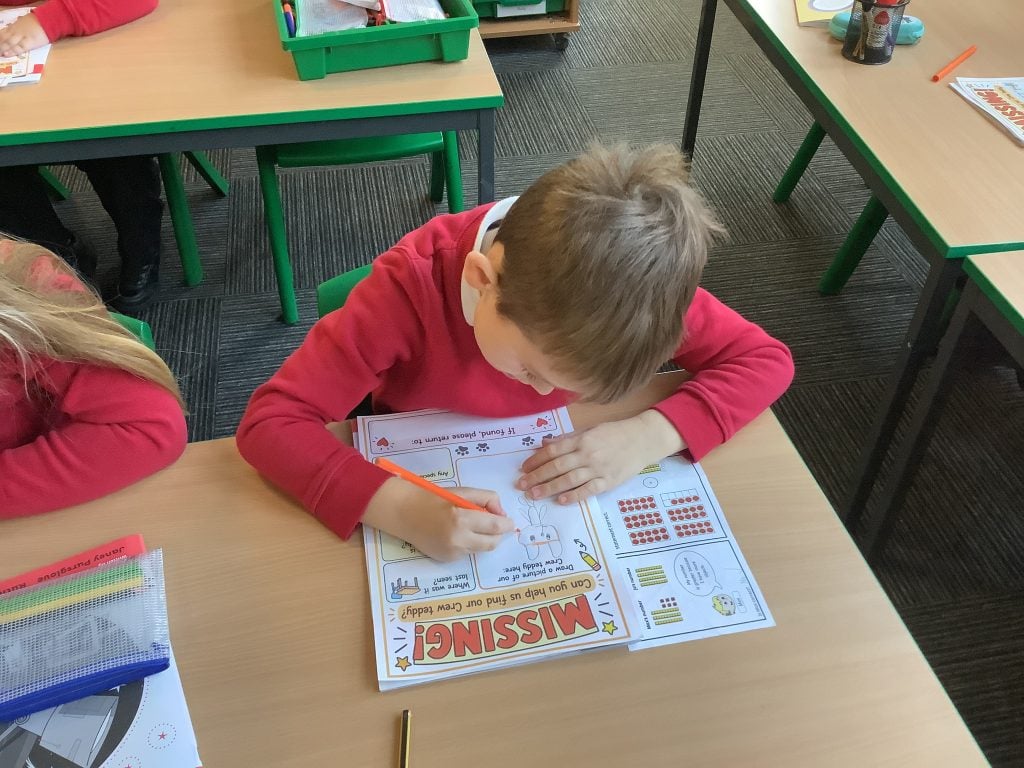
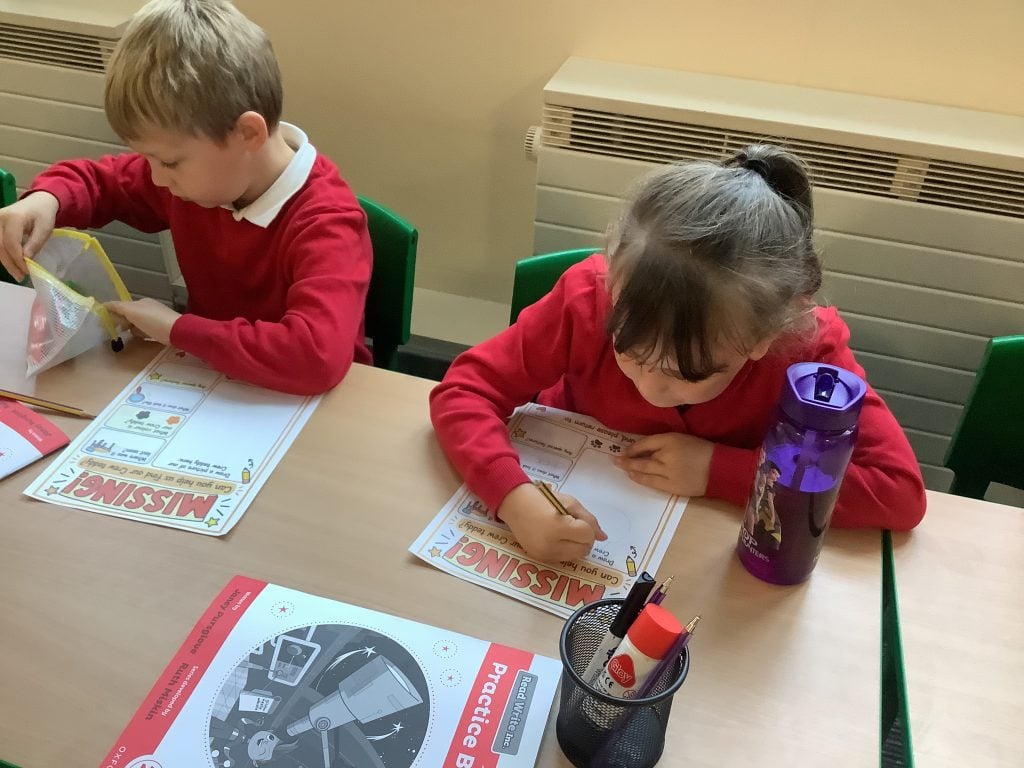
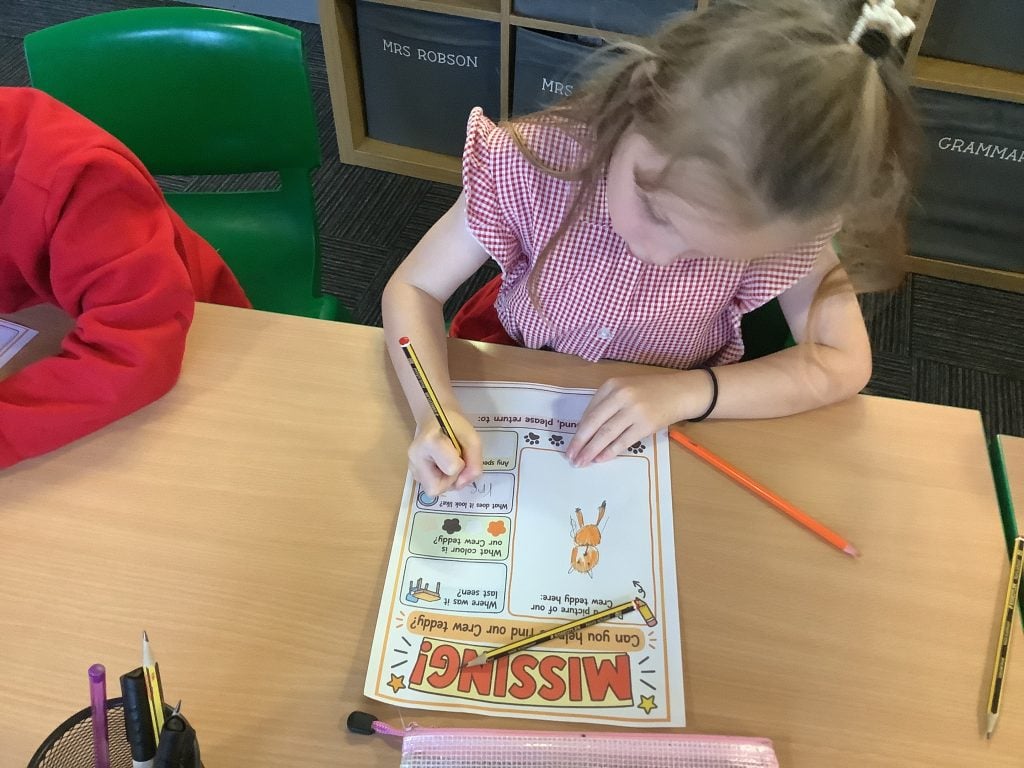
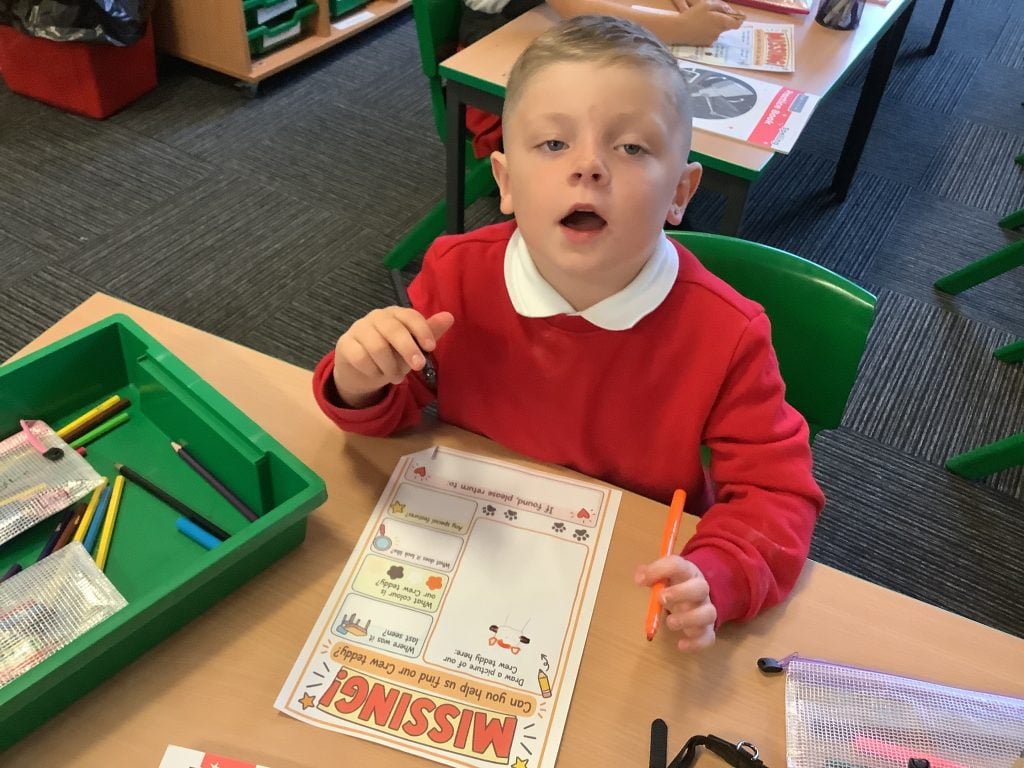
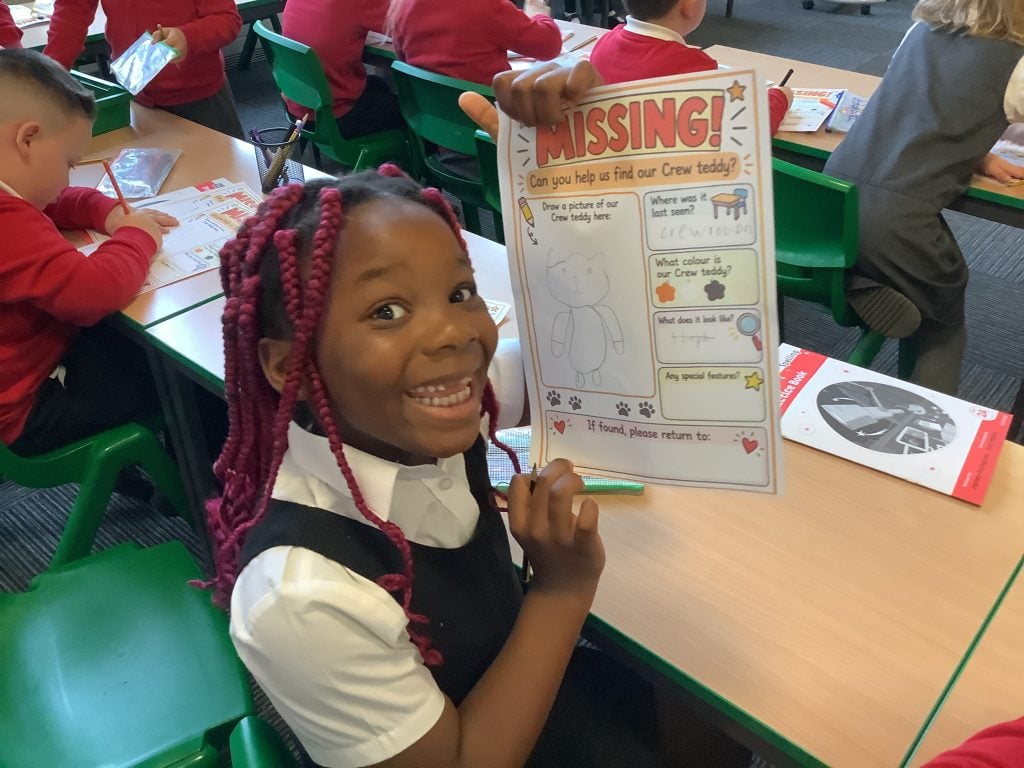
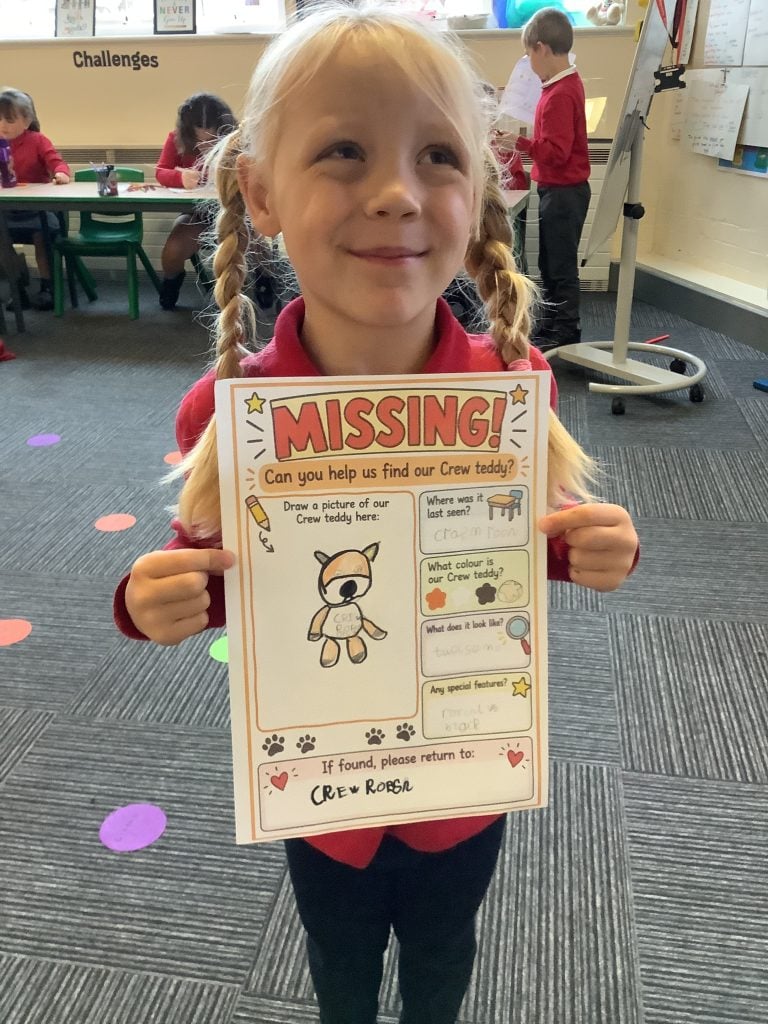
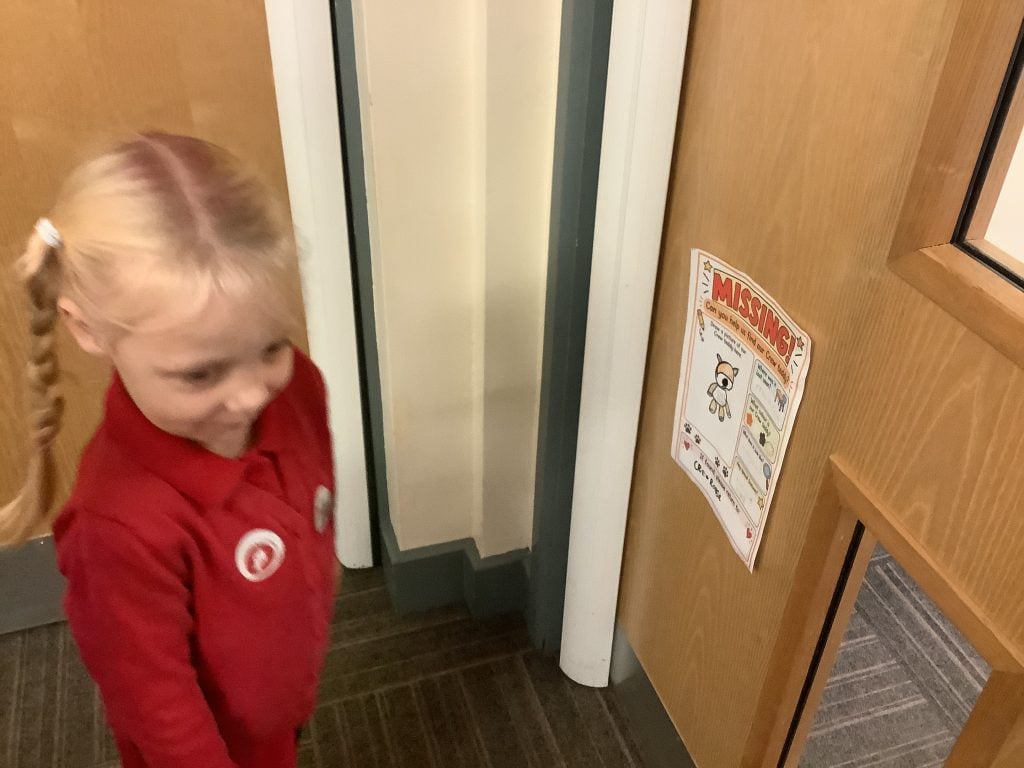
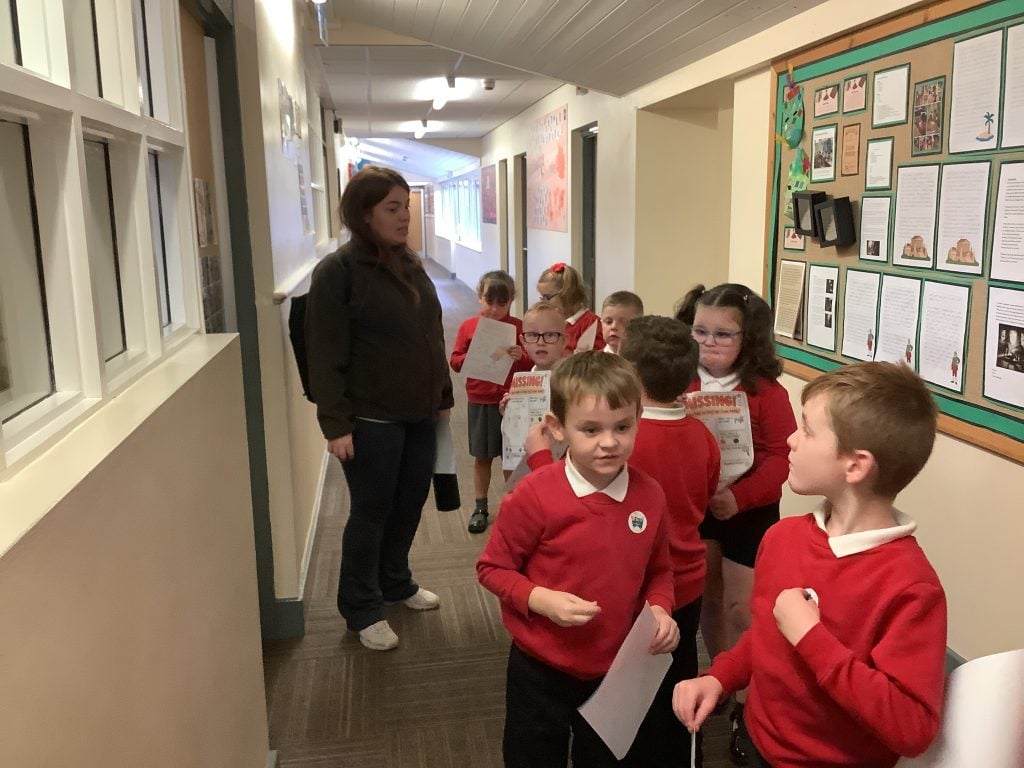
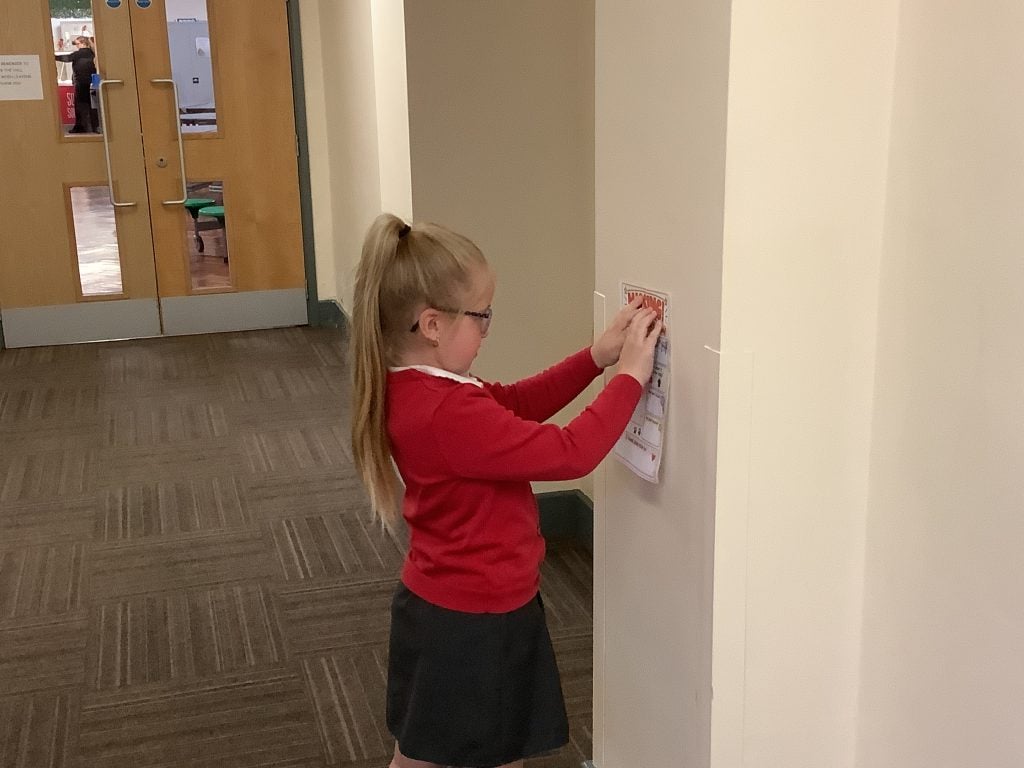
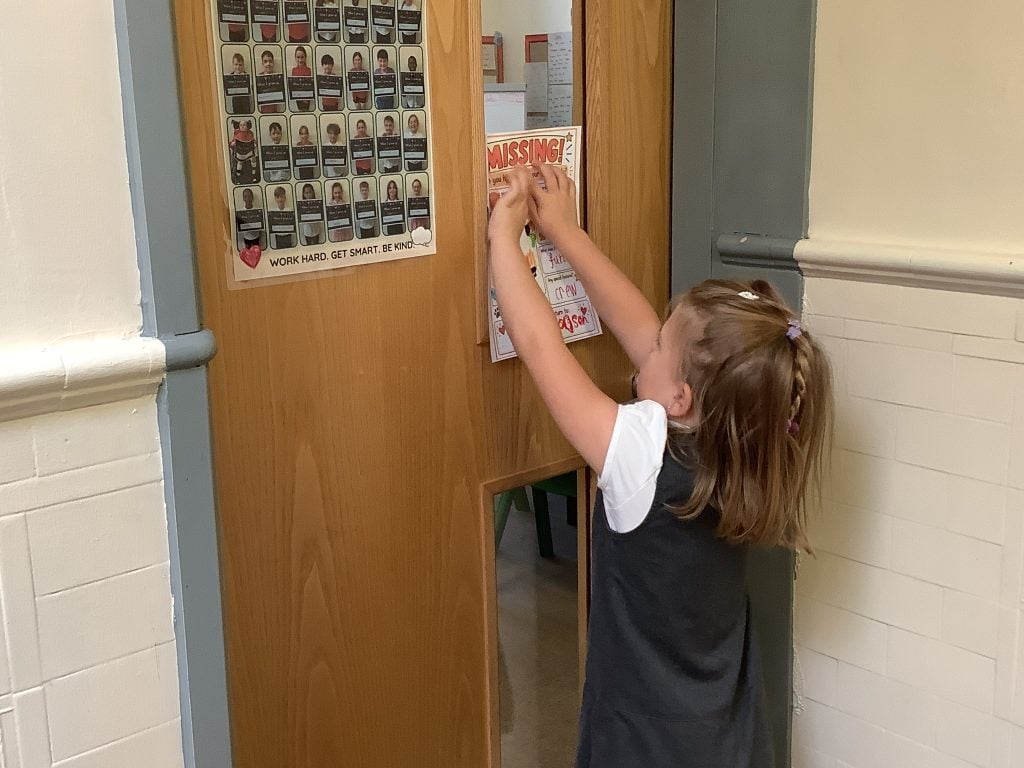
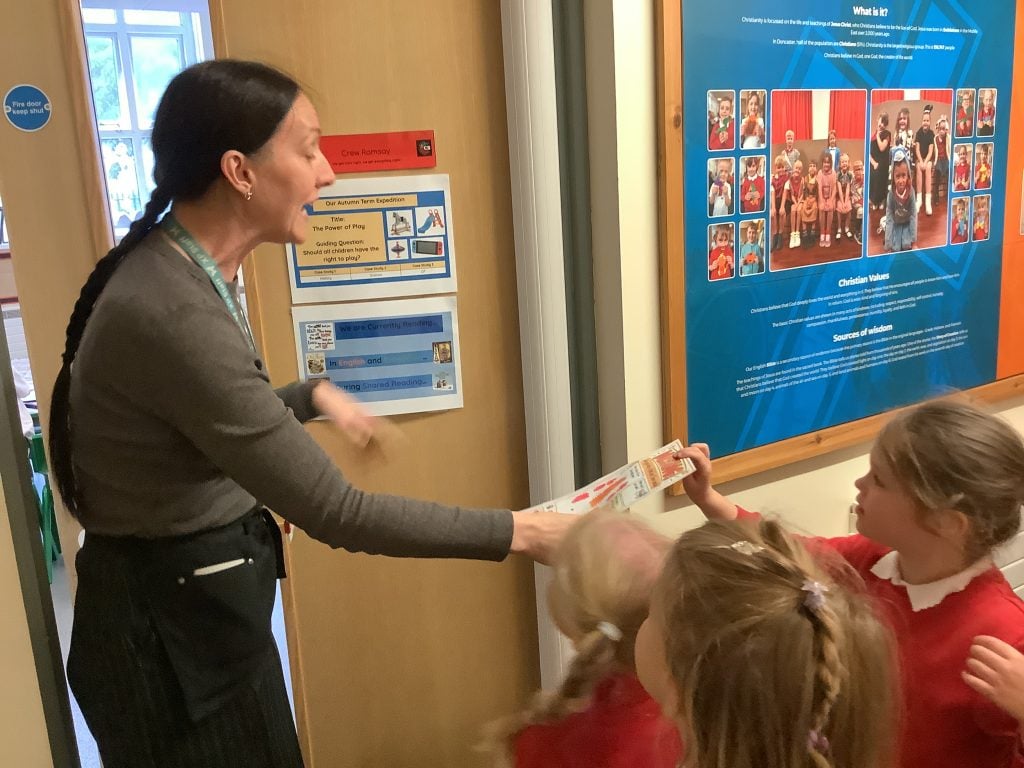
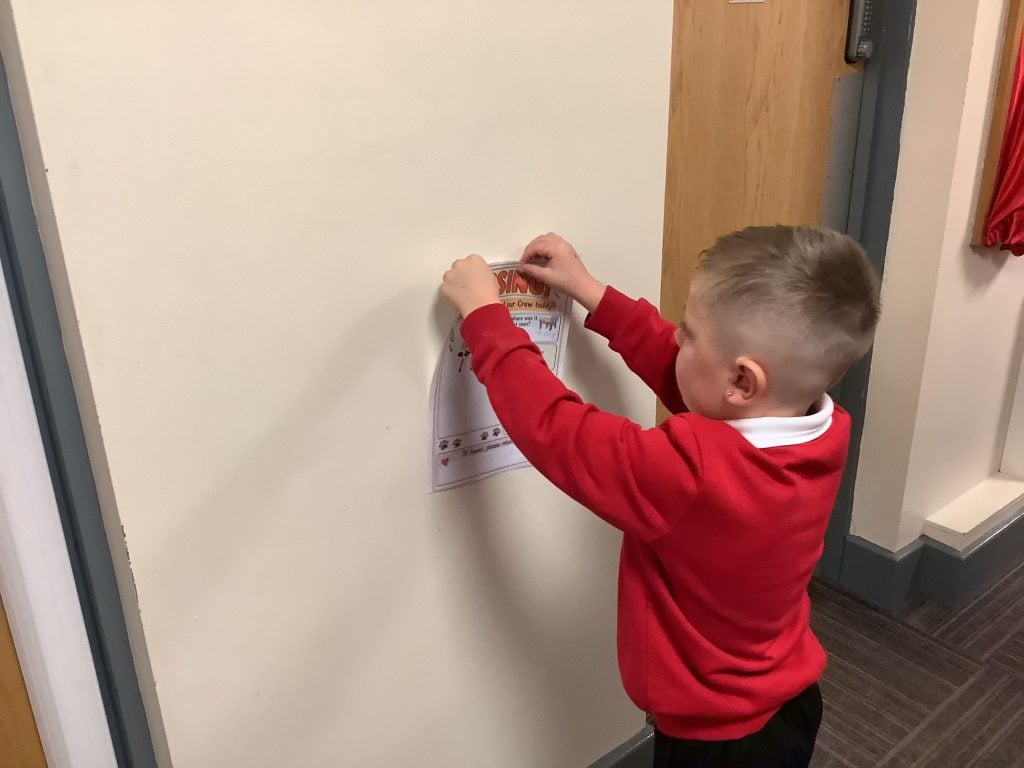
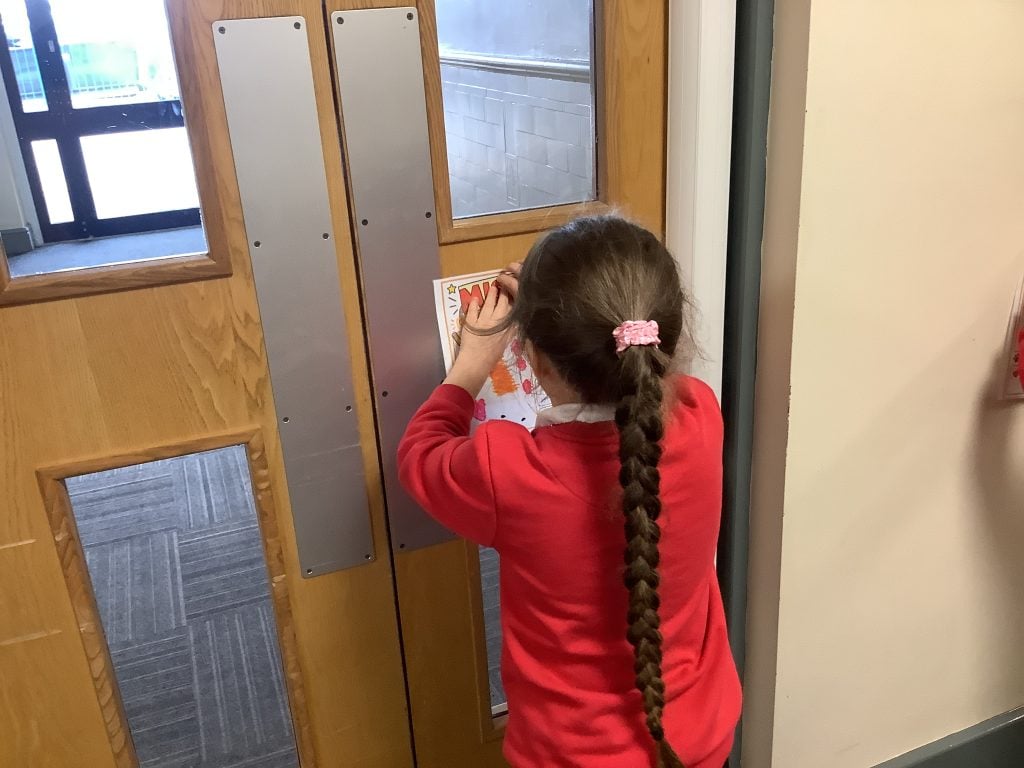
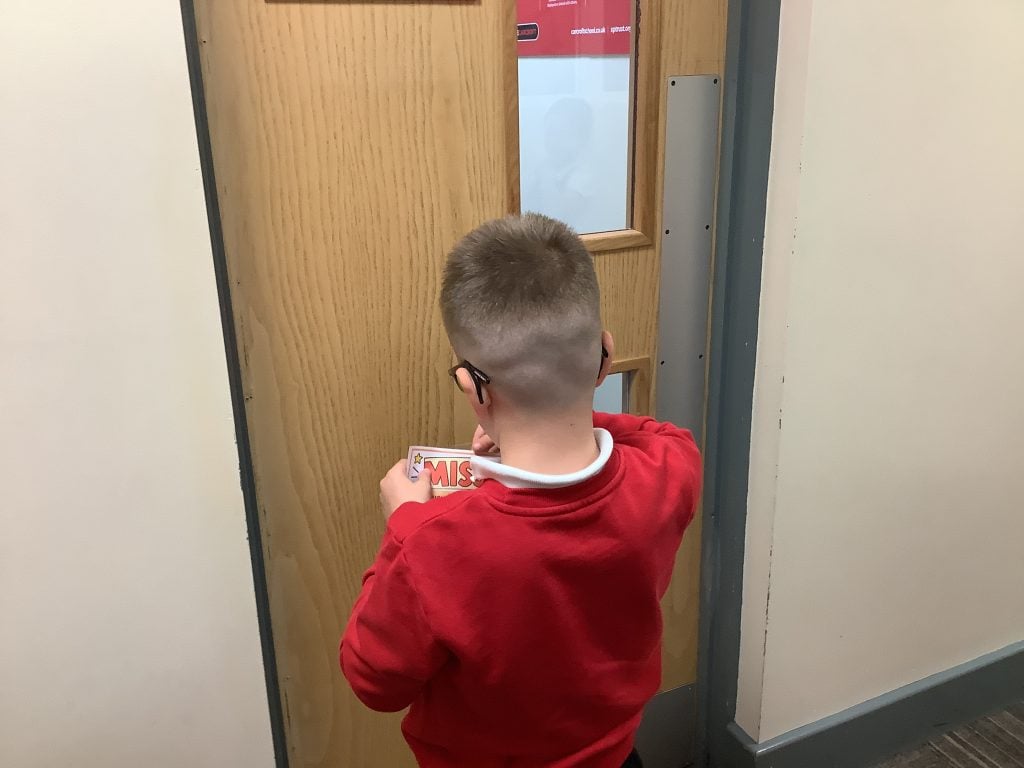
We were shocked this morning to find our Crew bear has gone missing! We made poster and asked around school to see if anyone has seen him!
We have been looking at the story ‘The Gruffalo’ in our writing sessions this week. We have talked about the features he has and how we can show them using different shapes and colours. We then used a step-by-step guide to help us. Once we were finished, we then told Miss McGlone everything we had included in our drawings to create The Gruffalo.
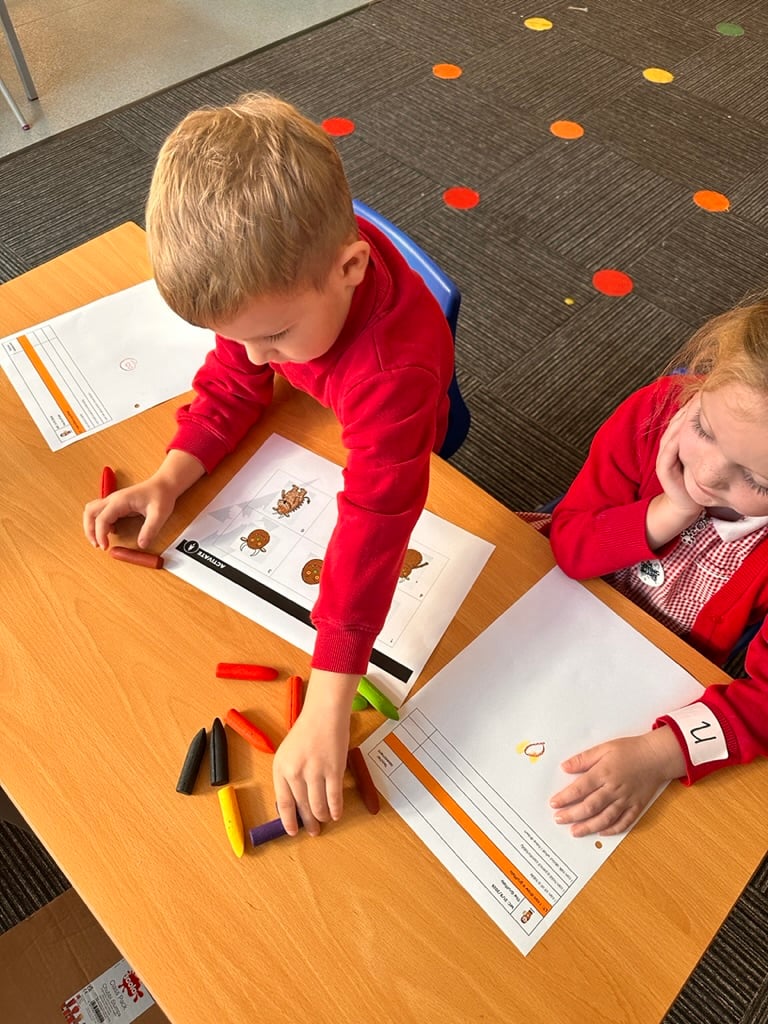
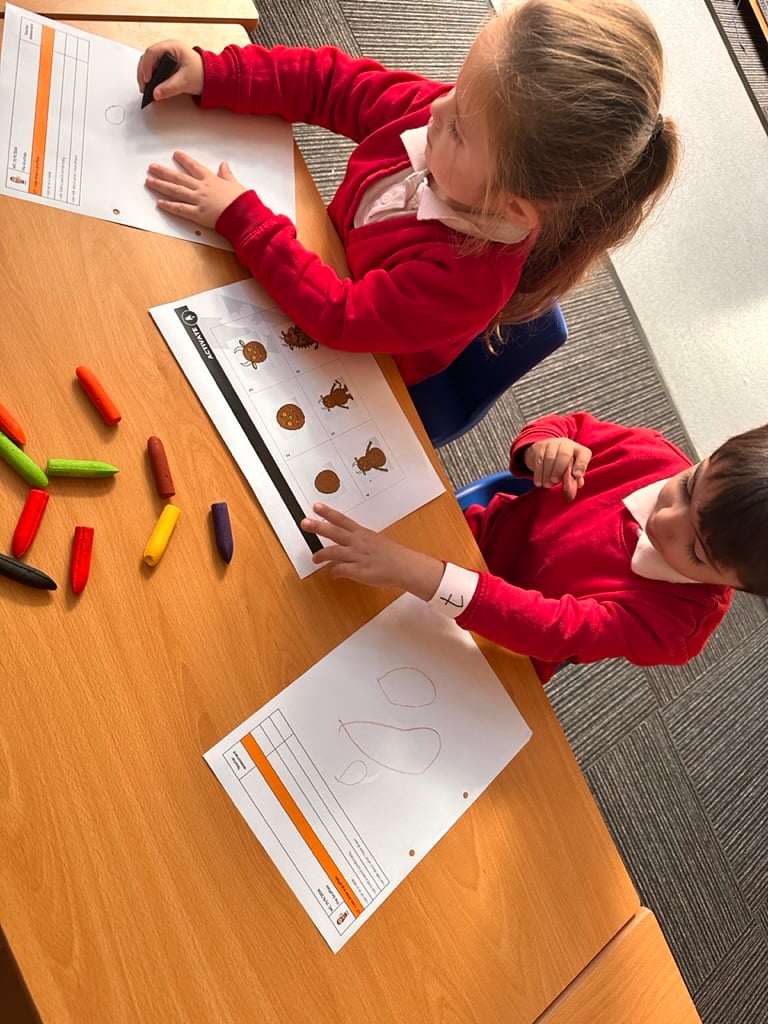
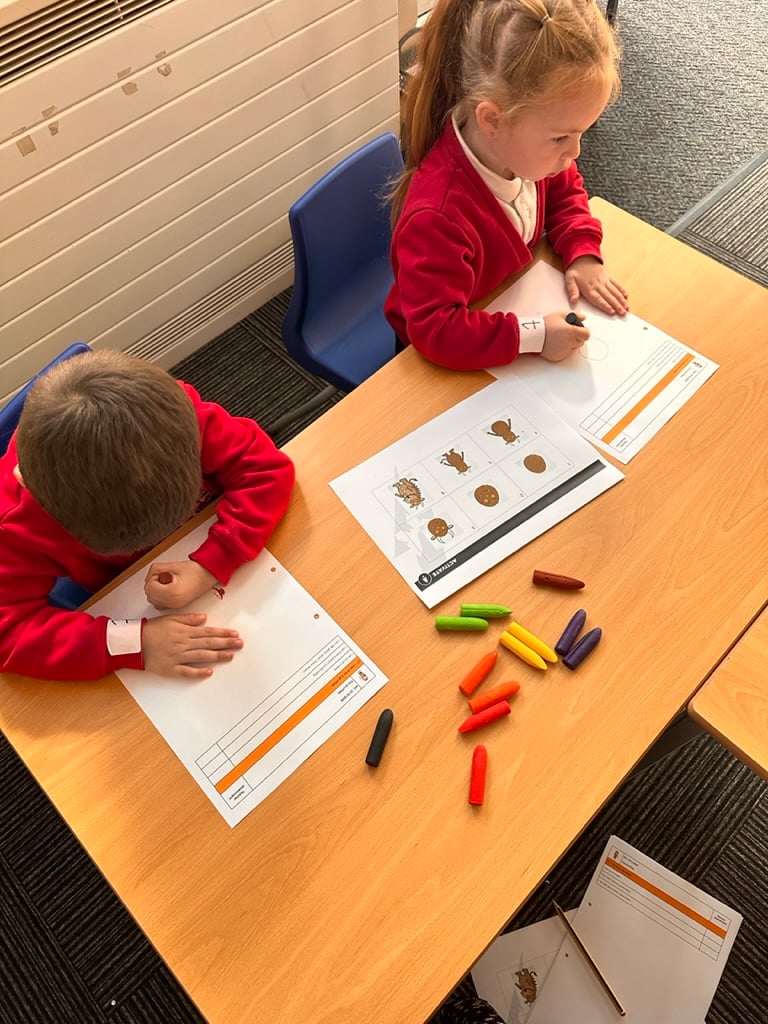
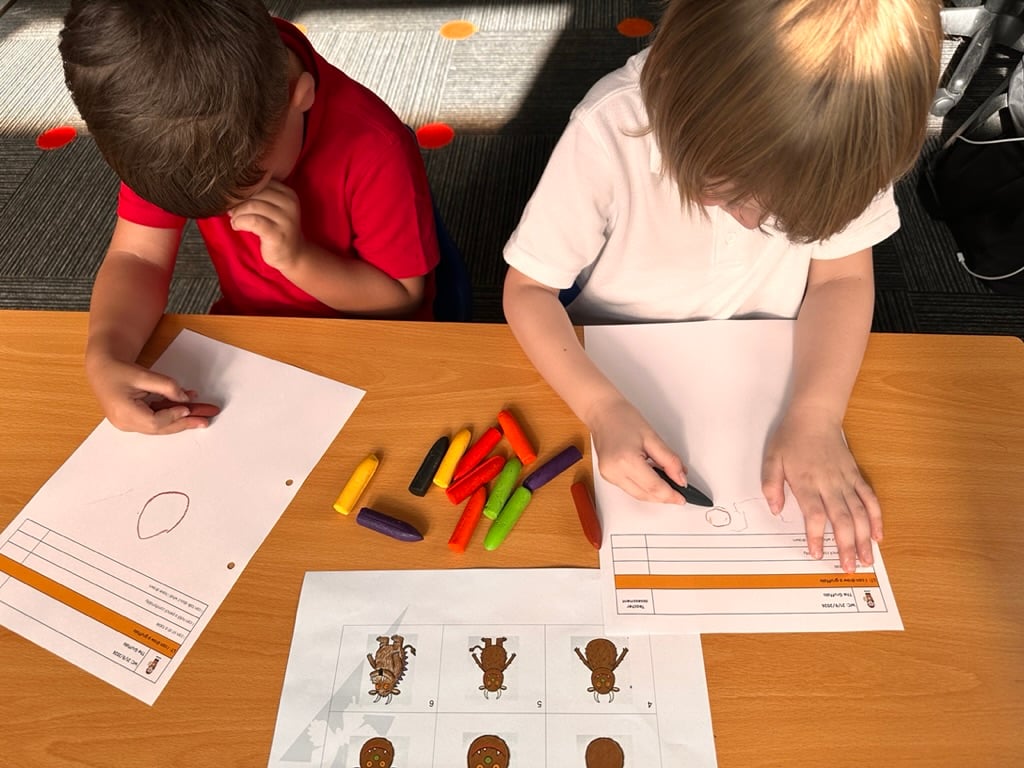
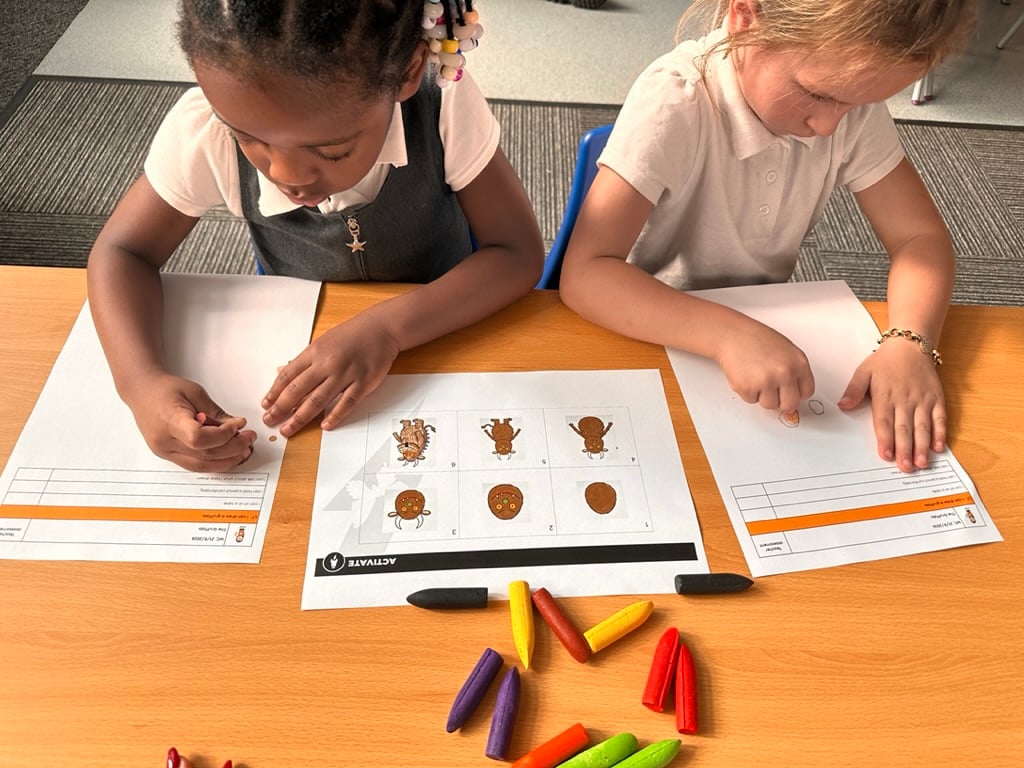
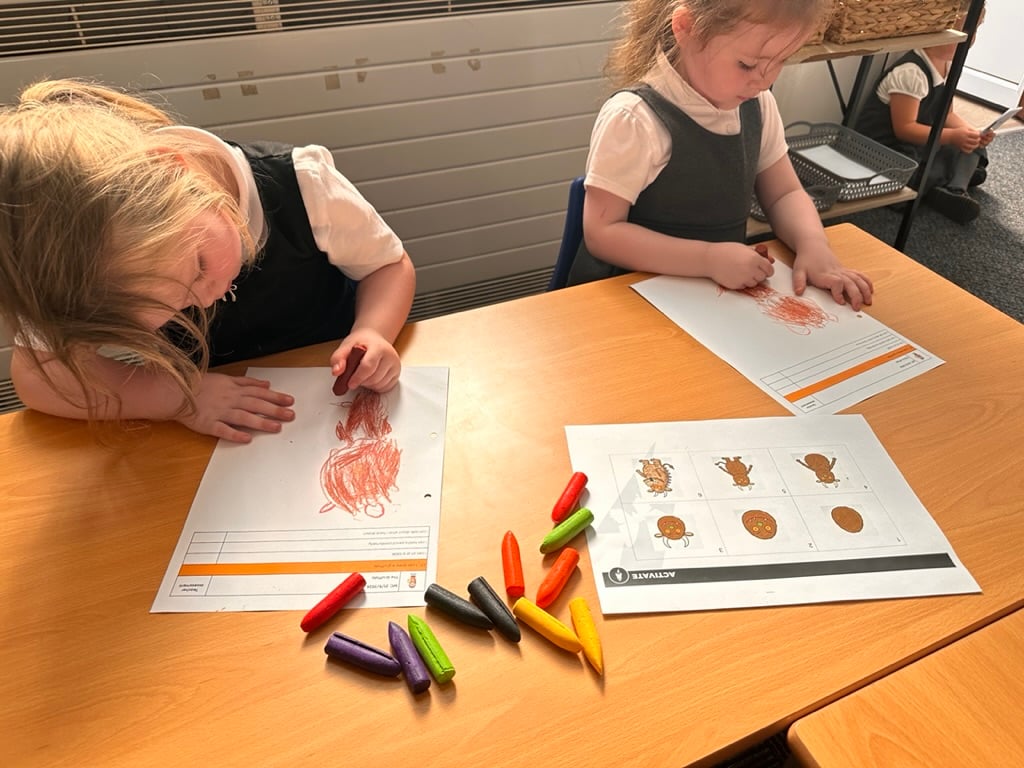
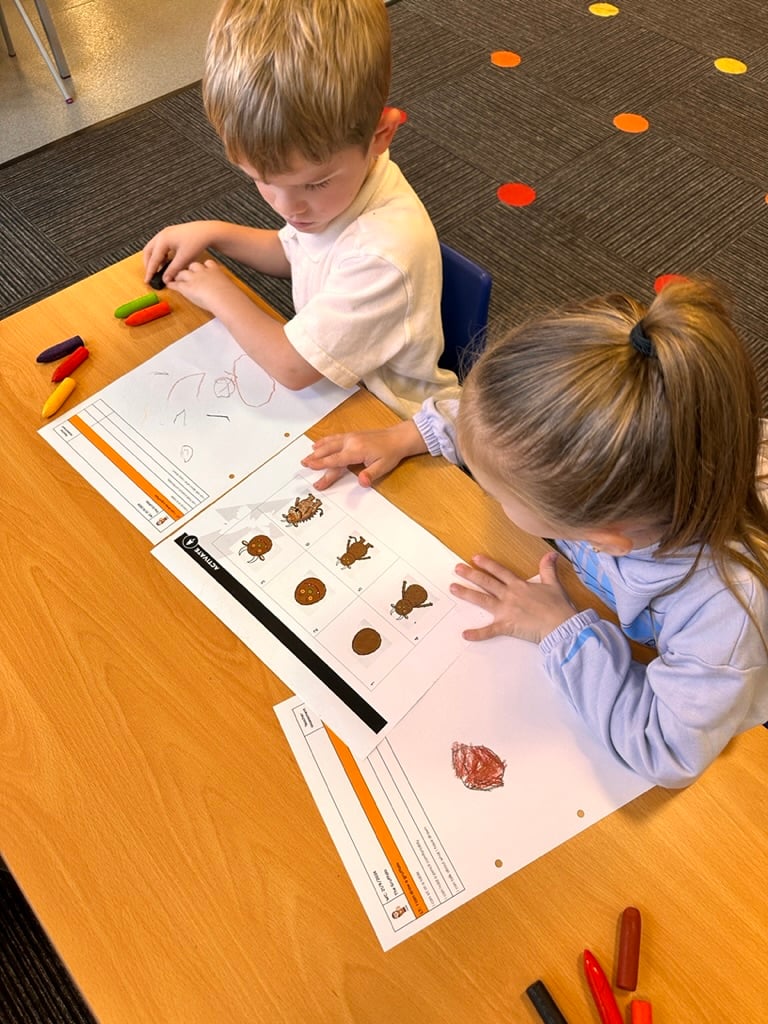
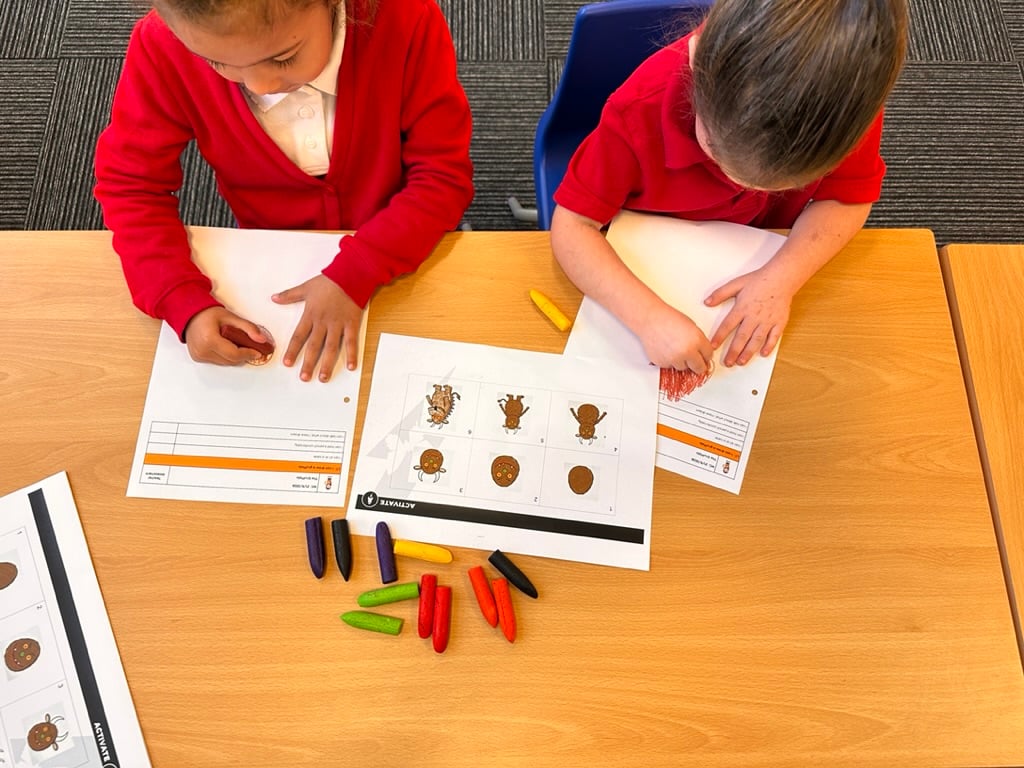
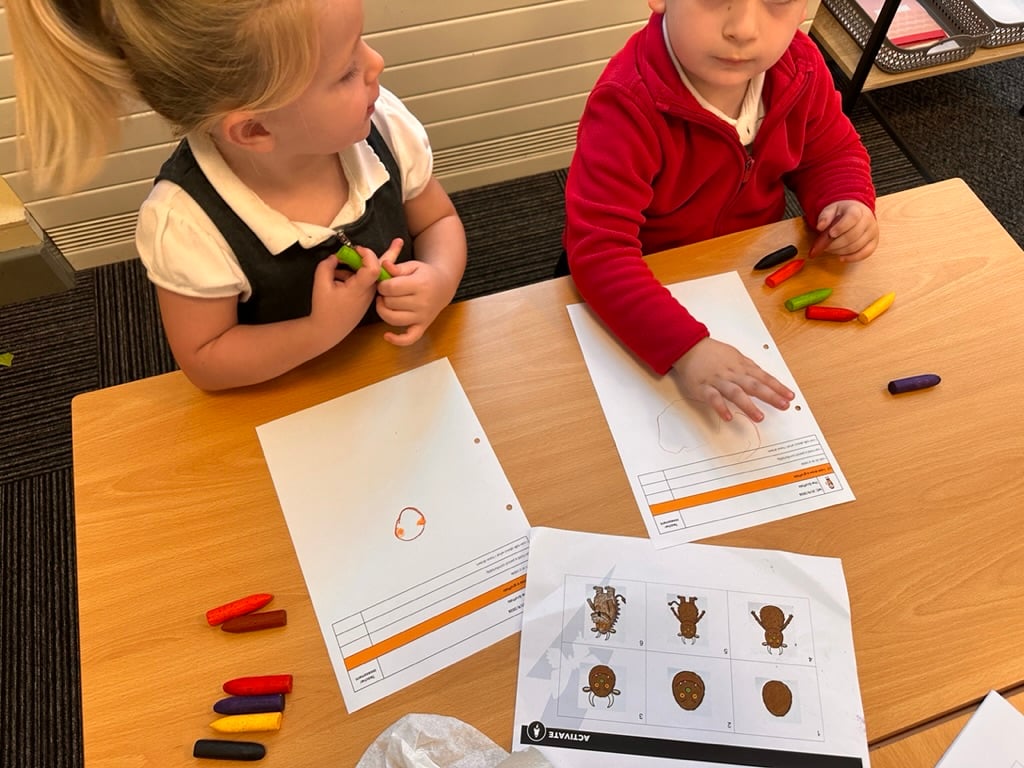
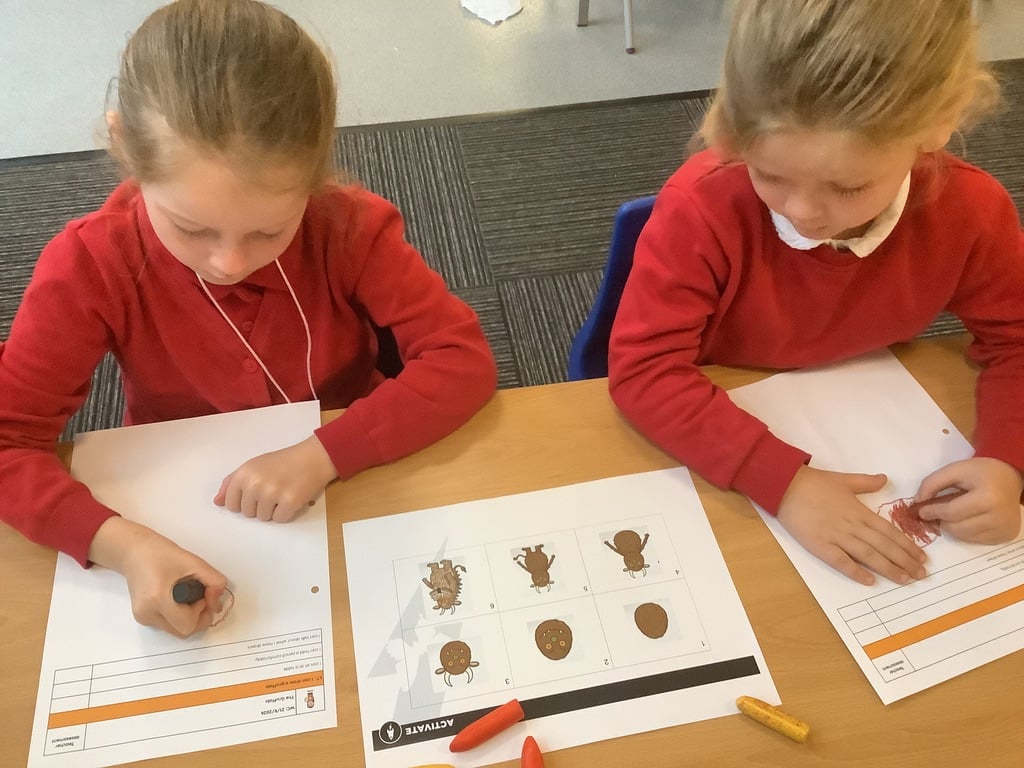
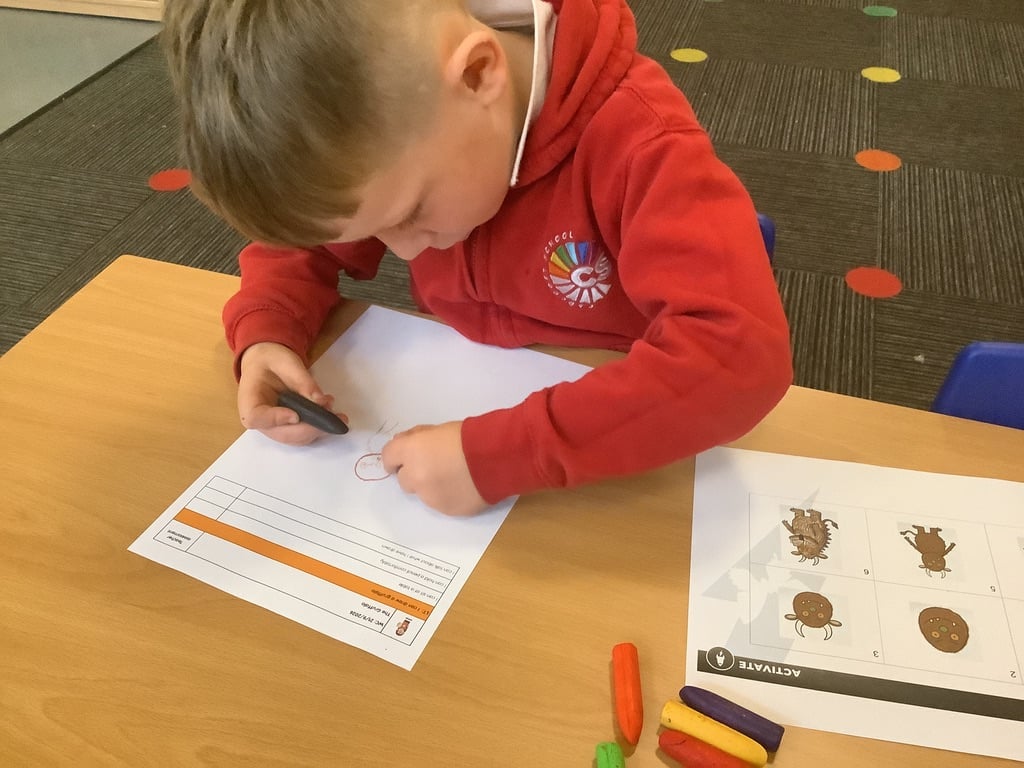
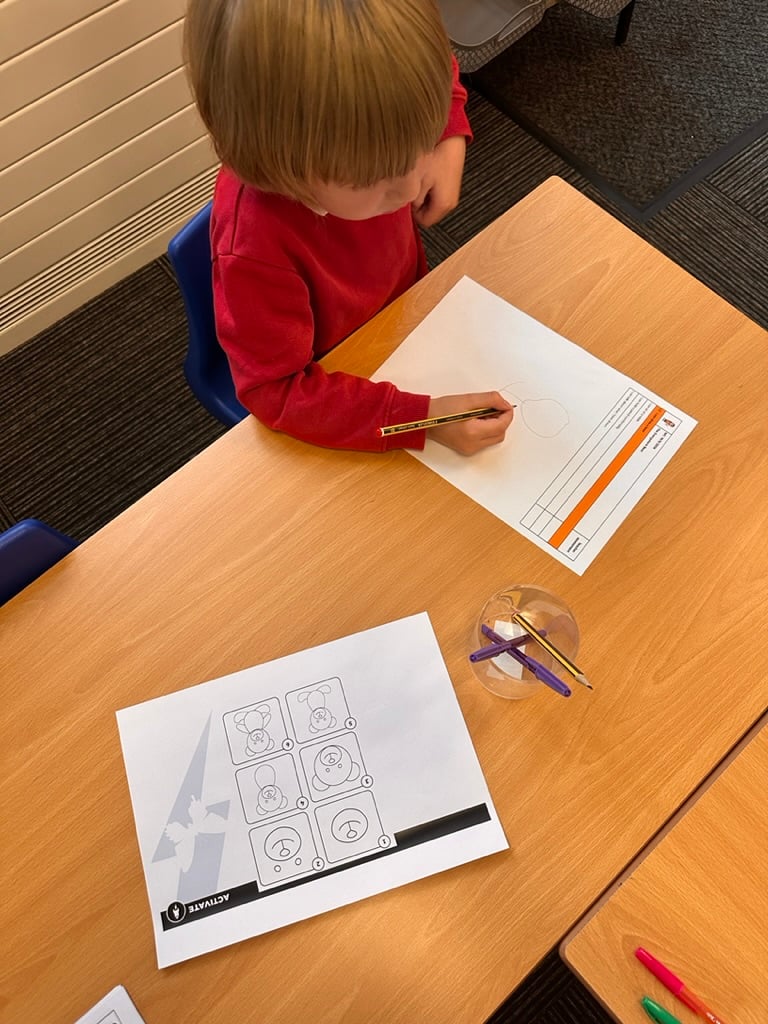
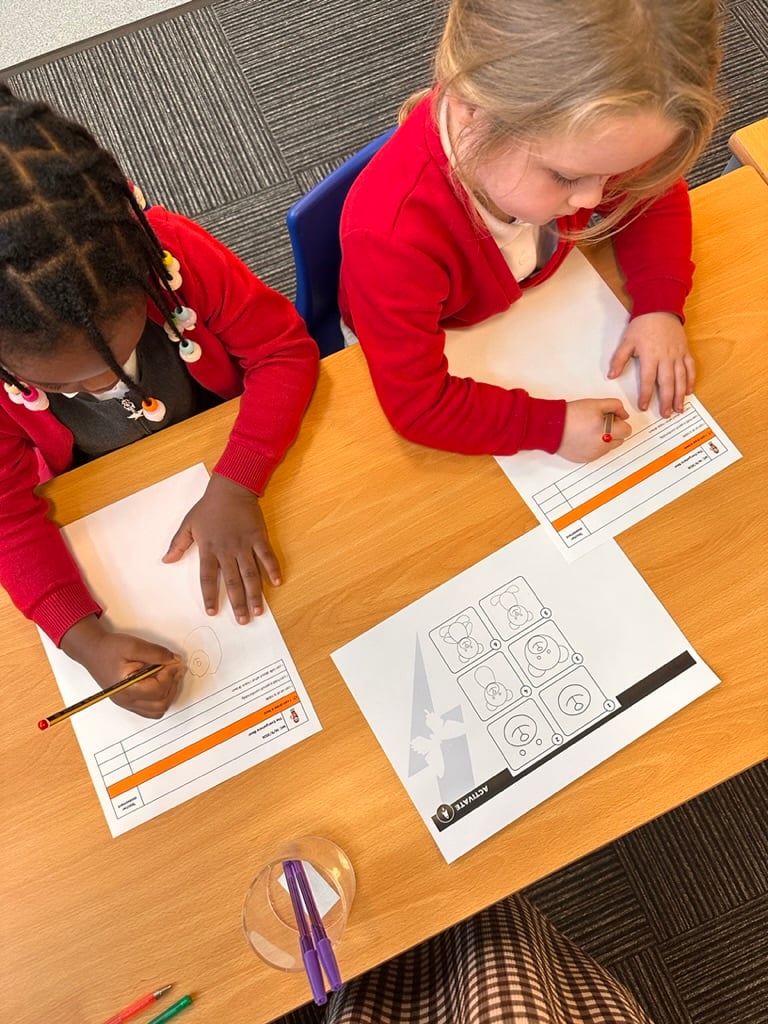
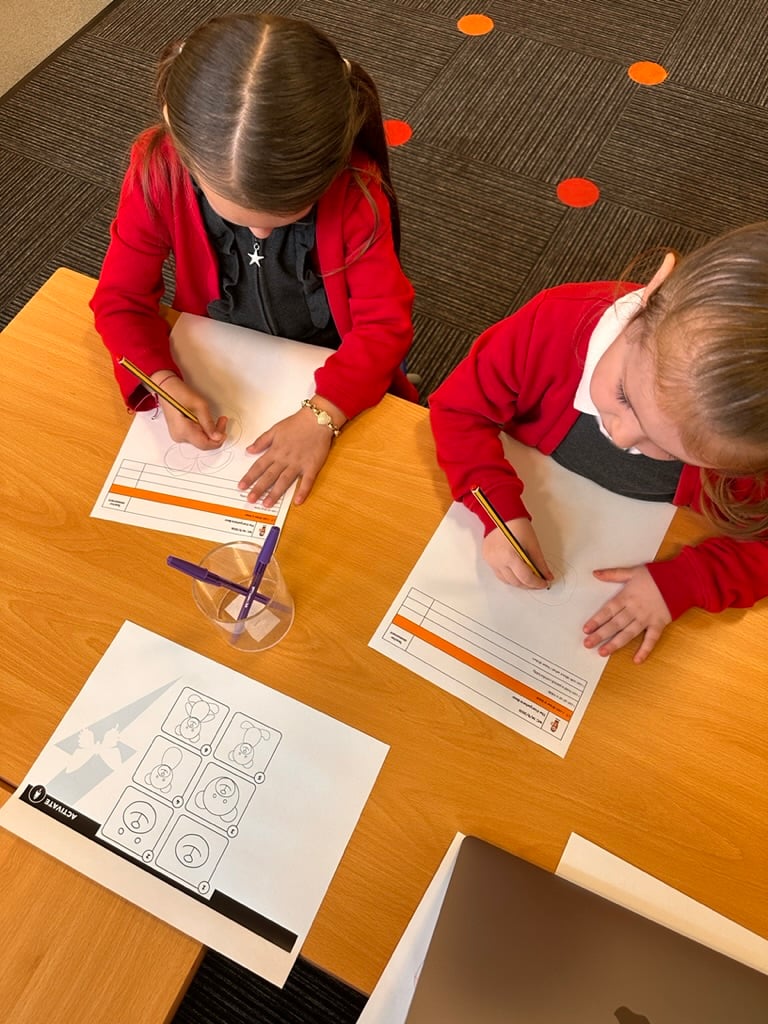
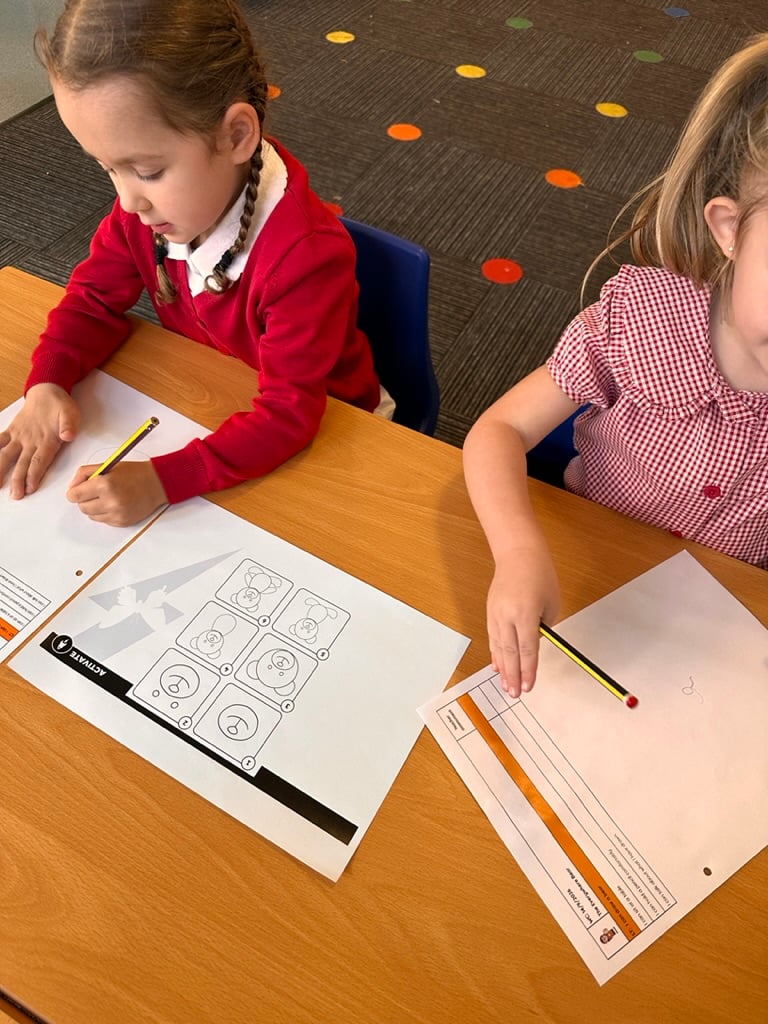
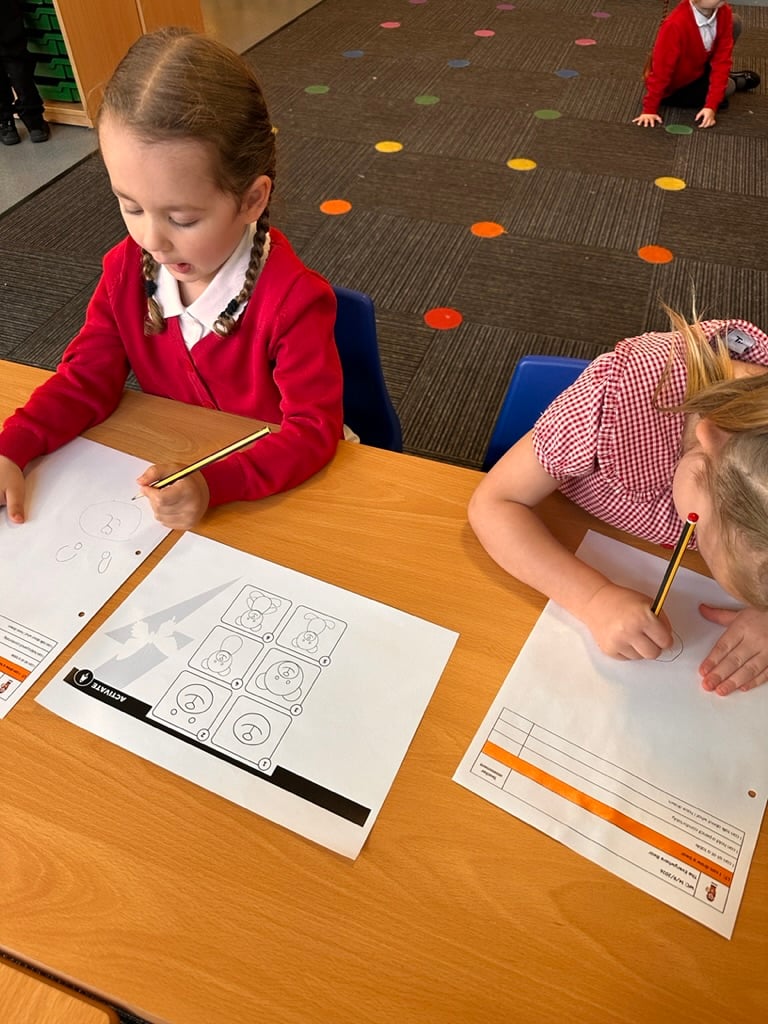
We have been looking at the story ‘The Everywhere Bear’ during our writing lessons, and it has inspired us to draw our own bears. We followed a step-by-step guide to help us use the correct shapes, and when we were done we told Miss McGlone all about the features of our bear, which she then added on as labels.
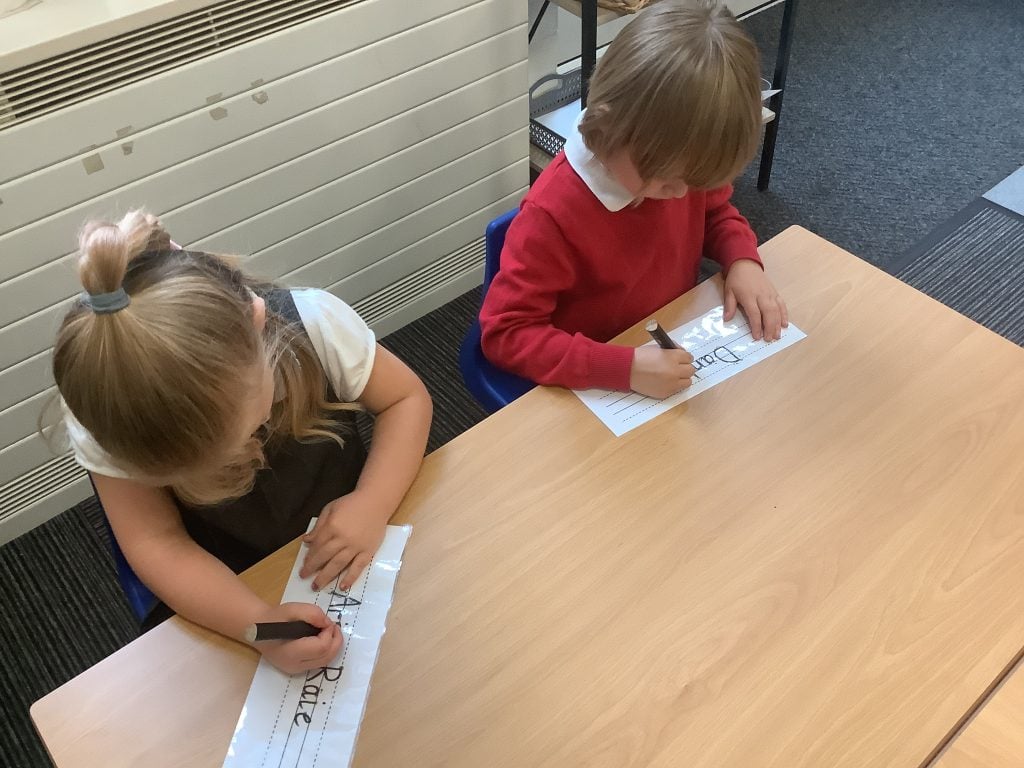
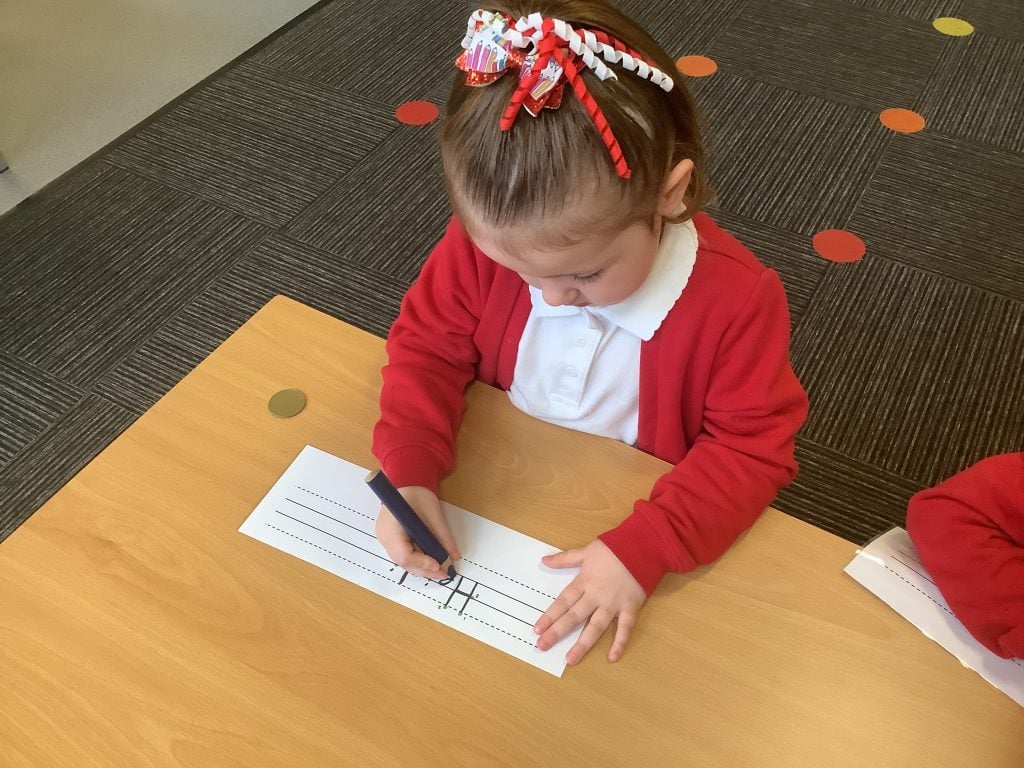
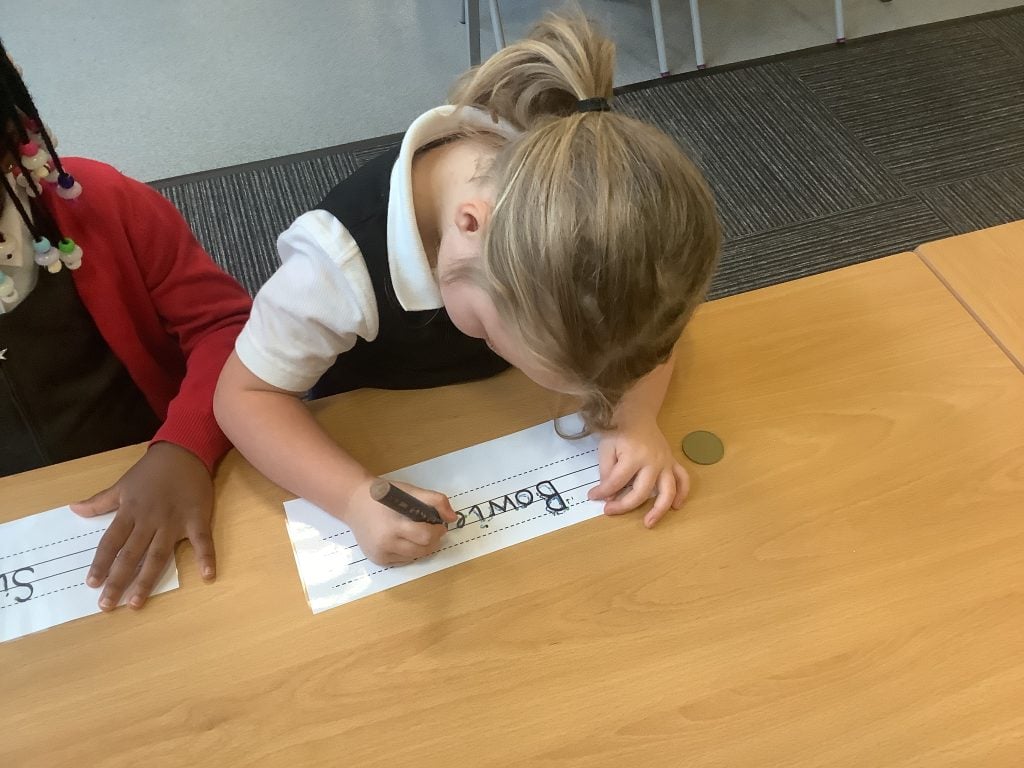
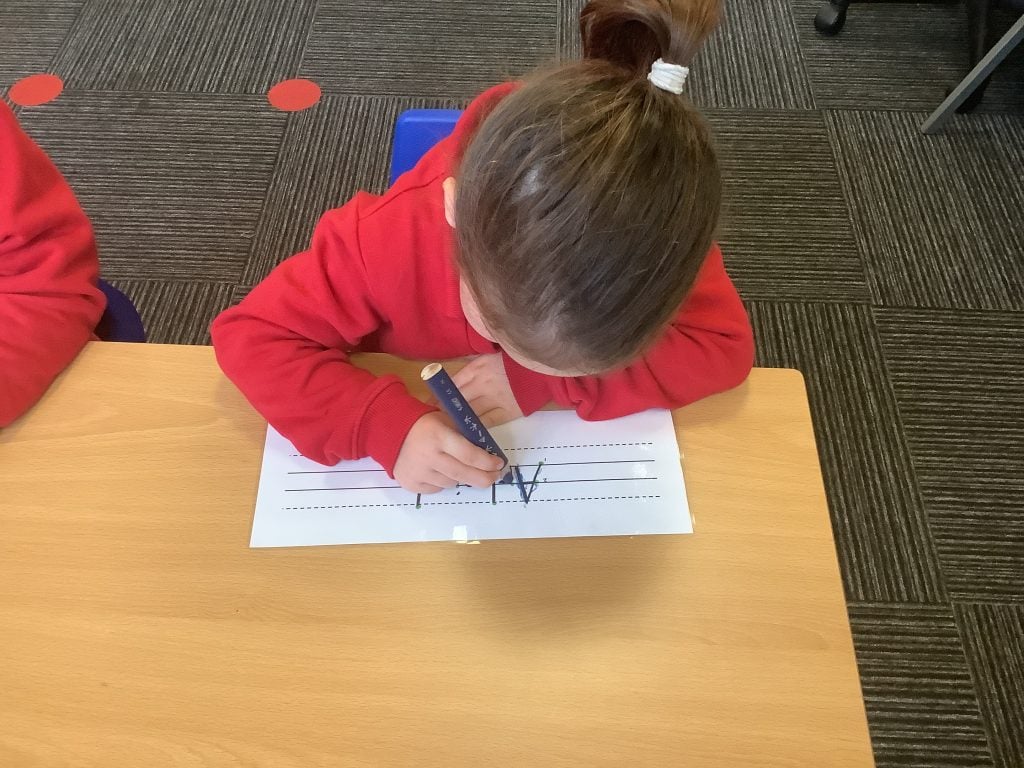
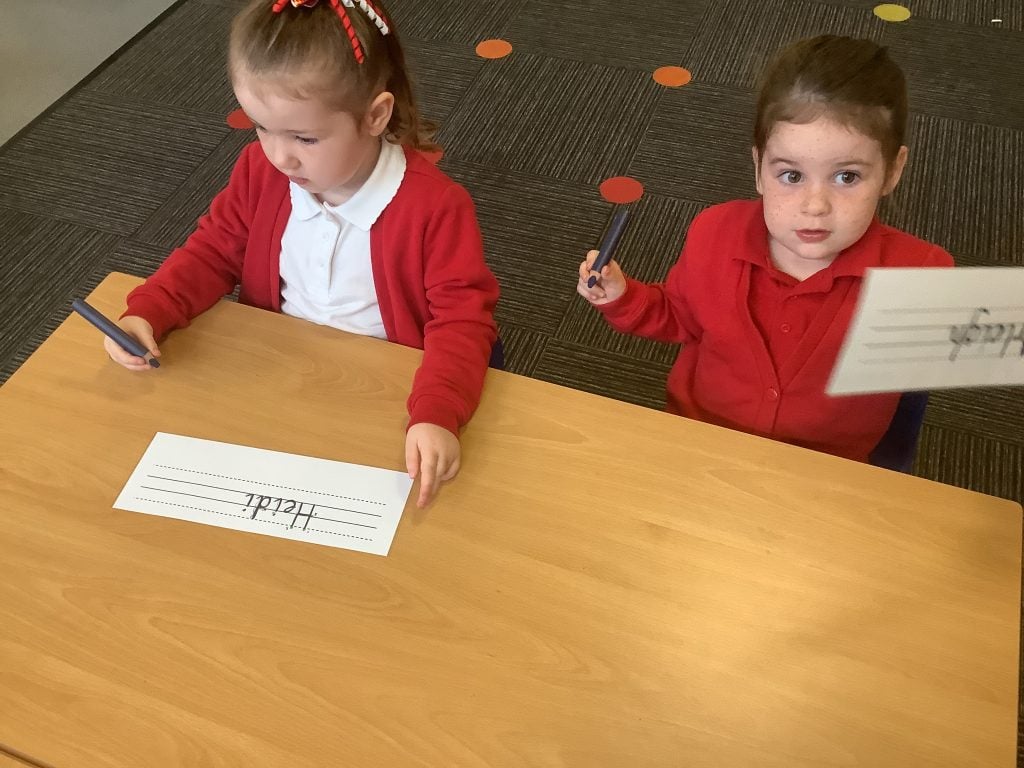
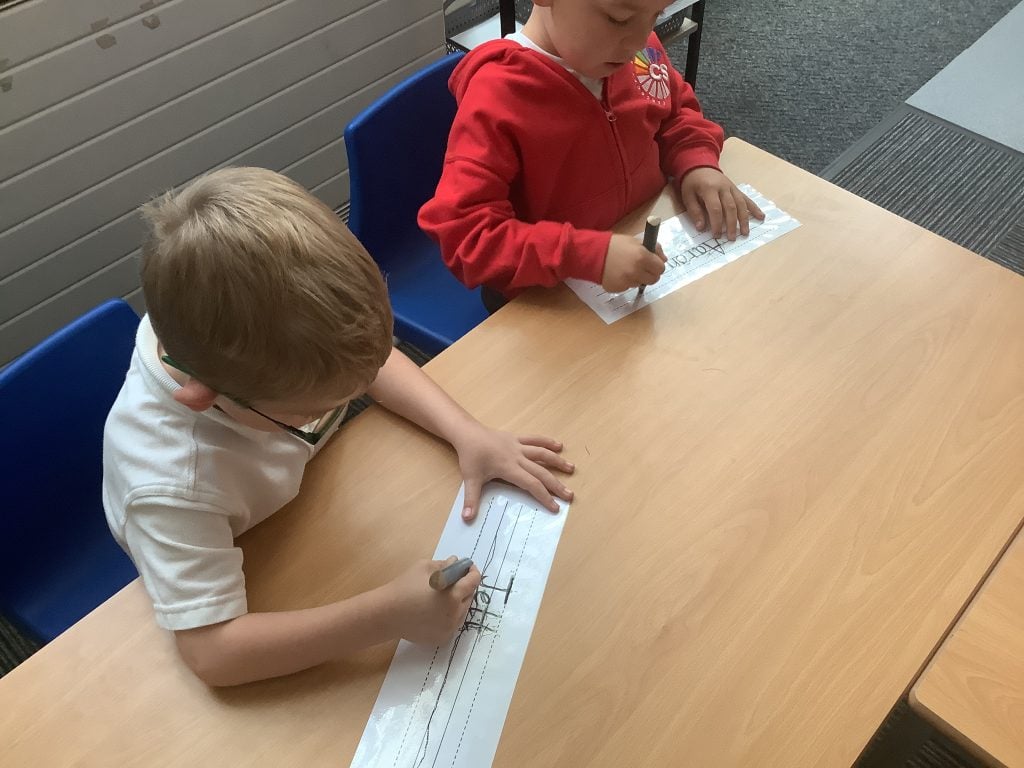
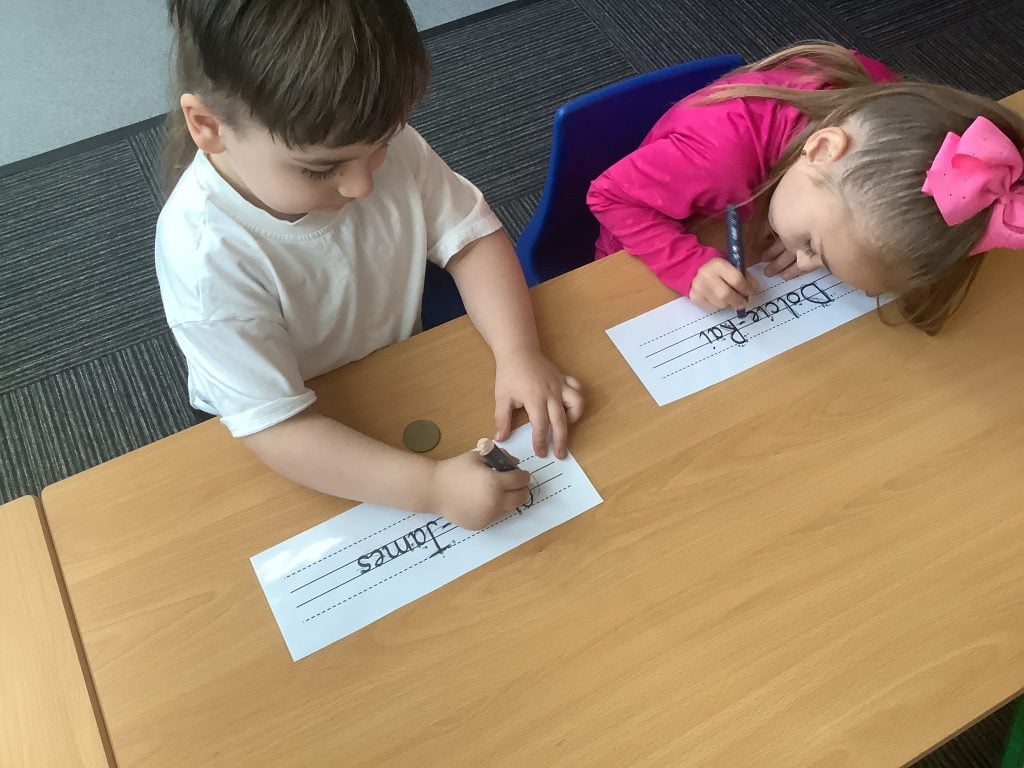
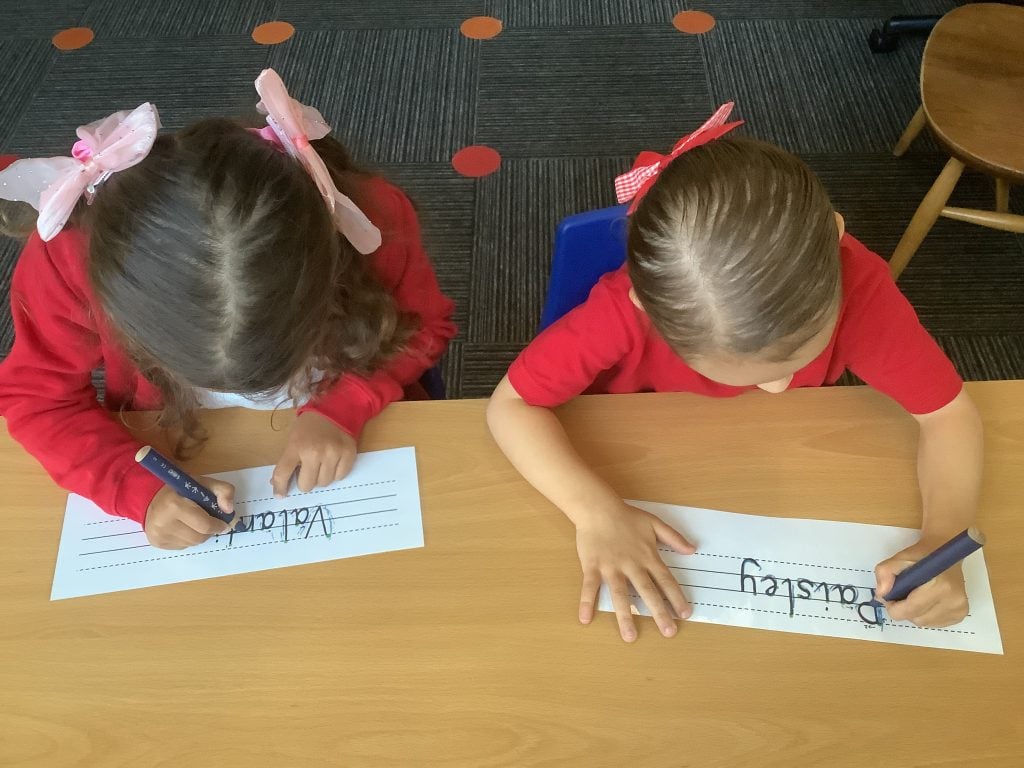
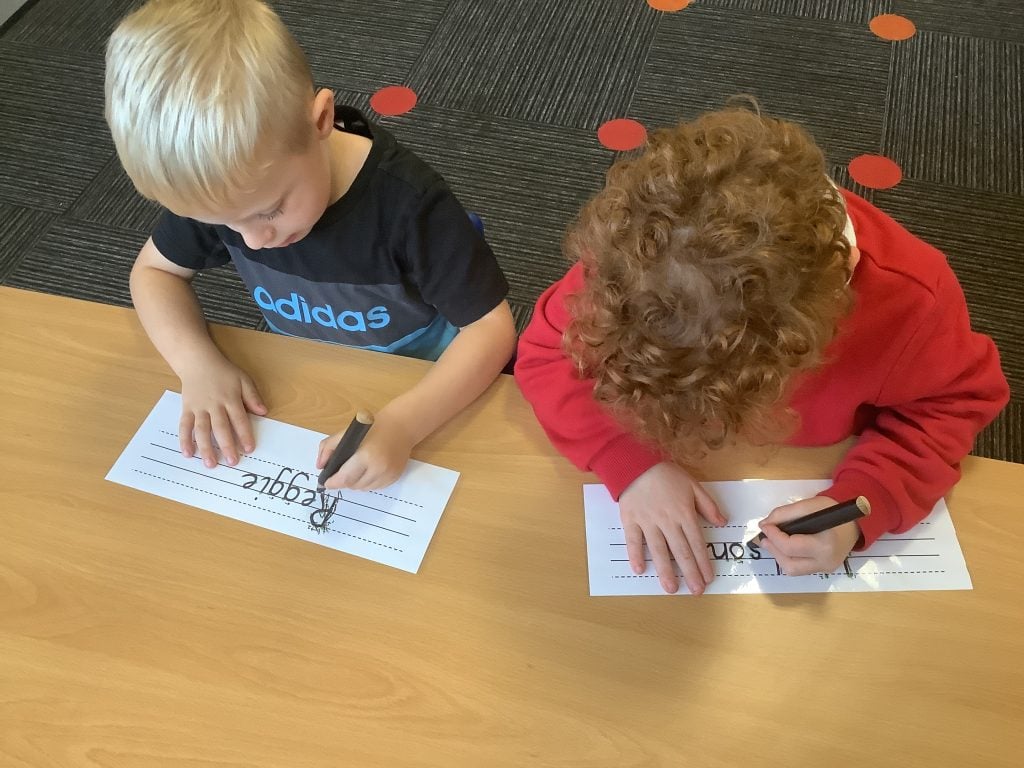
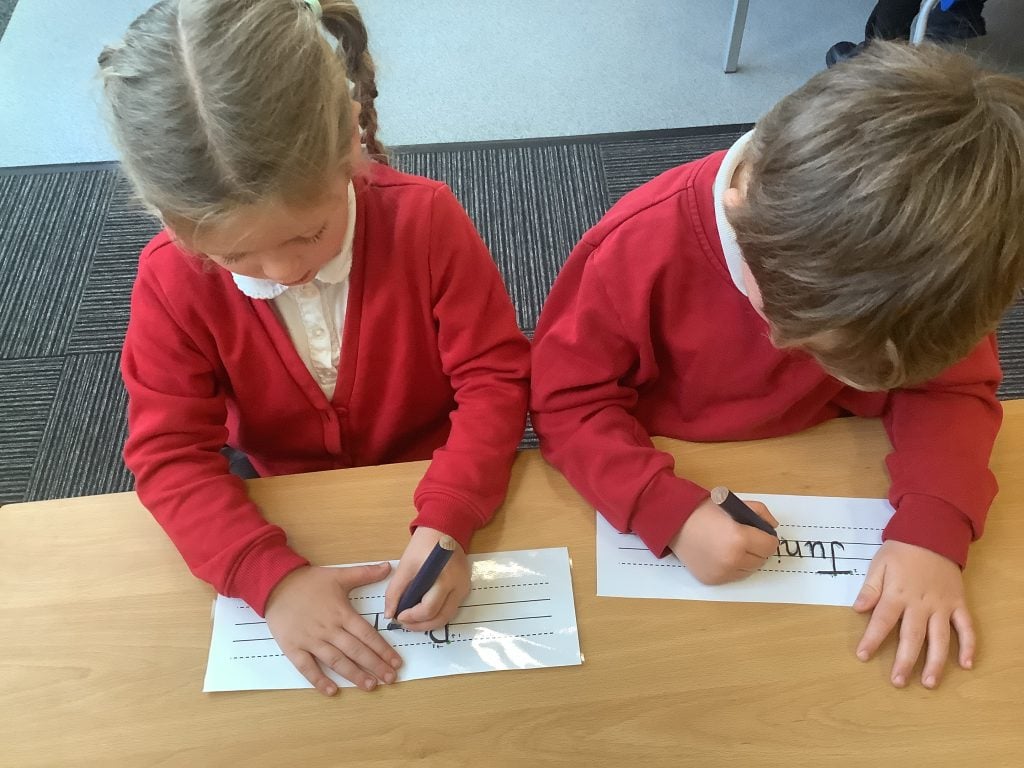
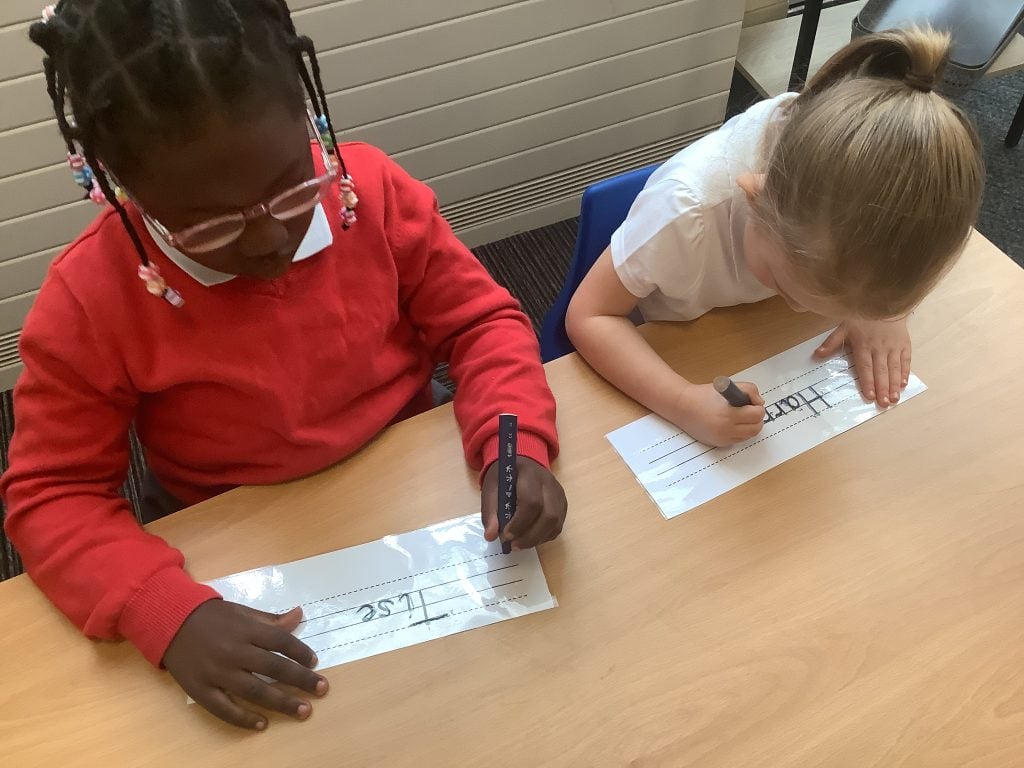
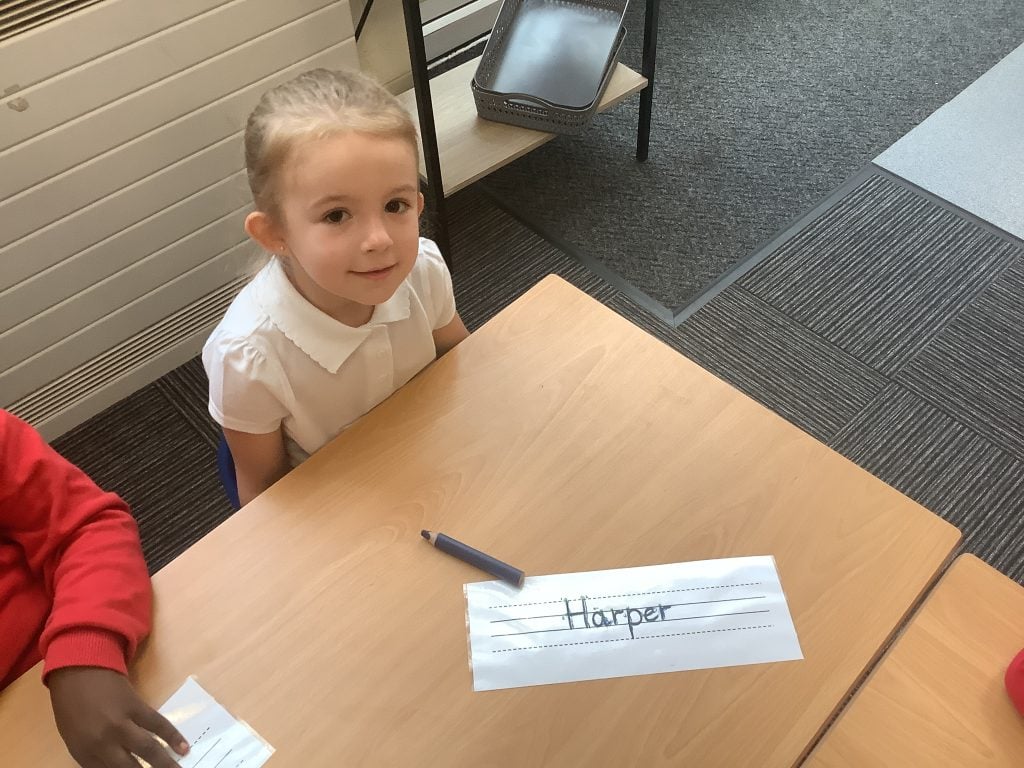
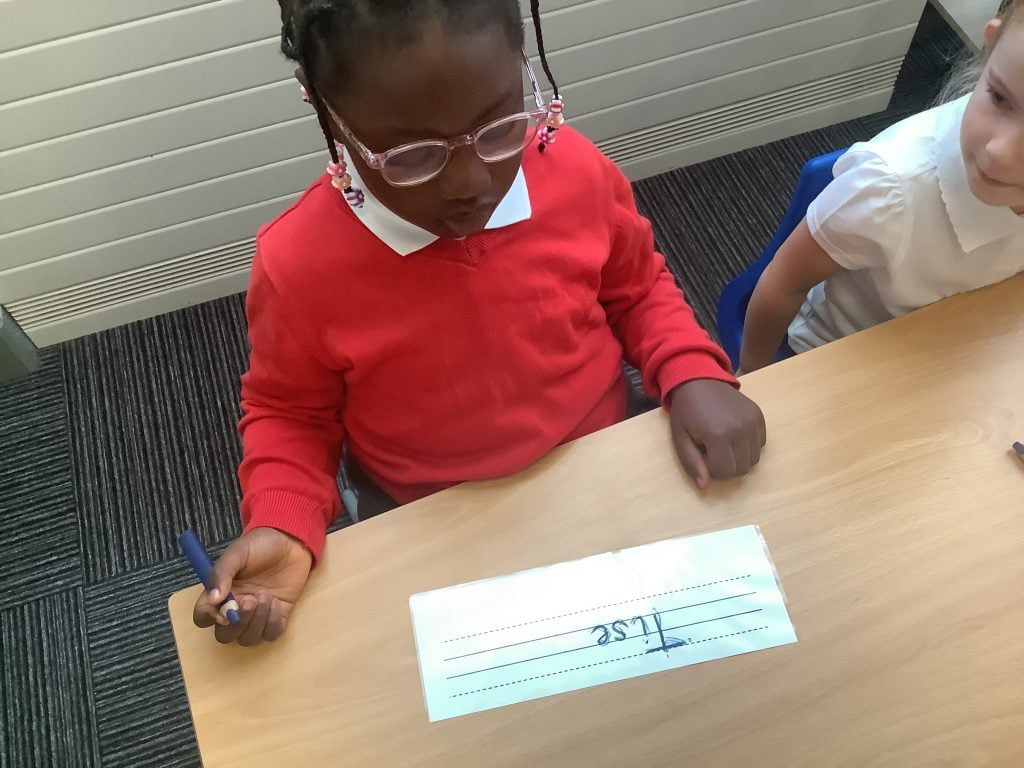
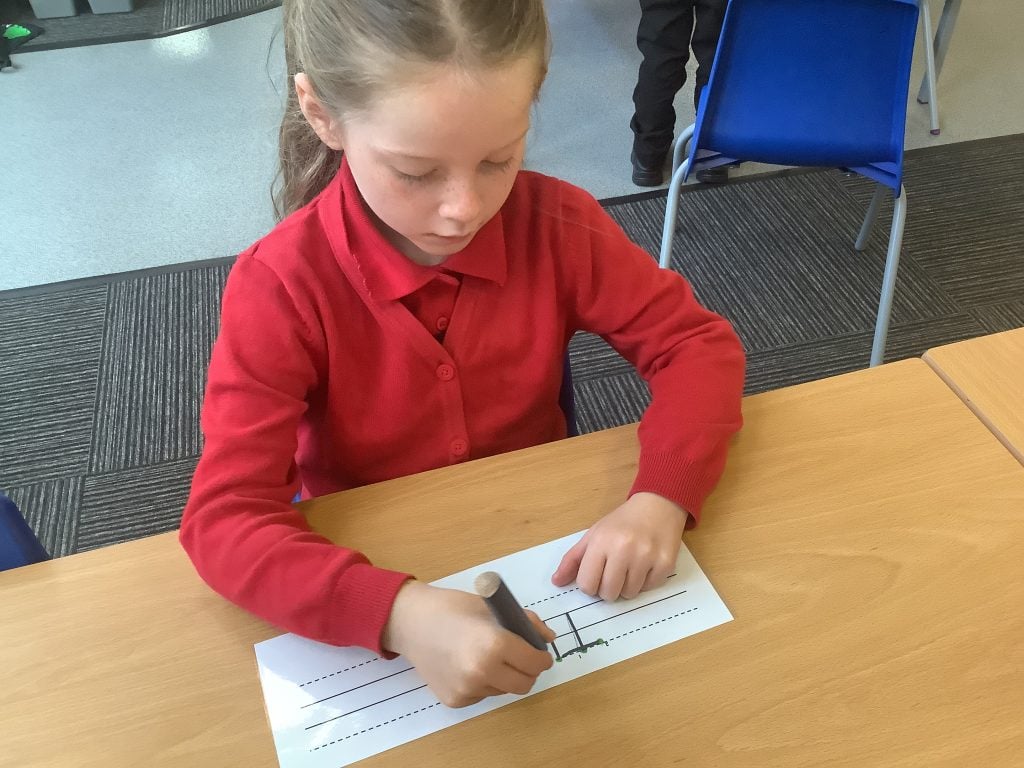
We have been putting our pre-writing skills to the test as we have been tracing our names, using a starting dot on each letter to help us with the correct letter formation.
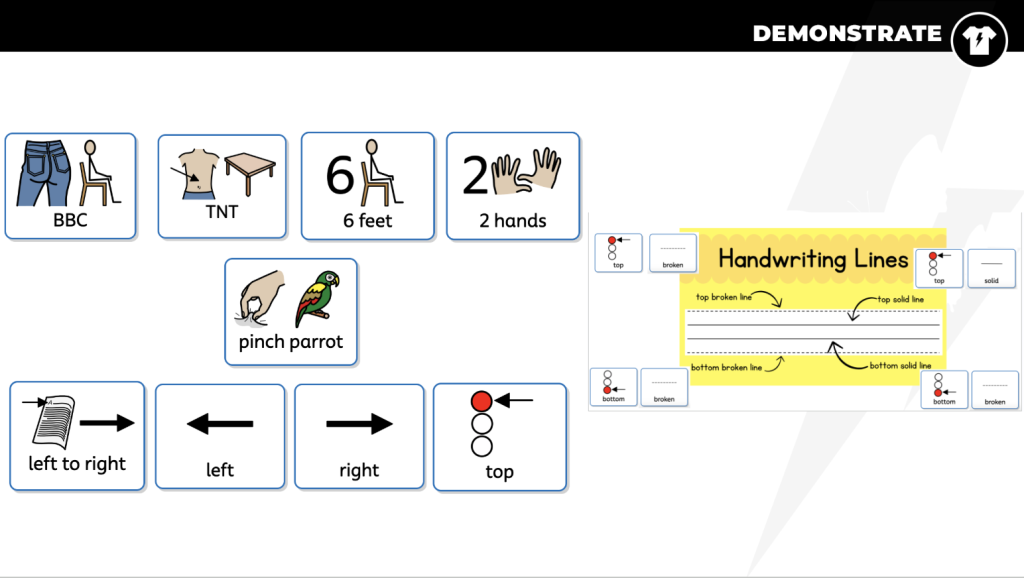
Crew McGlone are FANTASTIC at remembering all the correct steps to show that they are ready to write: BBC, TNT, 6 feet, 2 hands. They have really blown me away with how well they are working on their ‘pinch parrot’ to perfect their pencil grip! The children have also been learning about the specific handwriting lines: top broken, top solid, bottom solid, bottom broken, as well as looking at how we start writing at the top of the page and we write from left to right. Lots of things to remember, but using our writing wall to look at the Widgits of each skill really helps us!
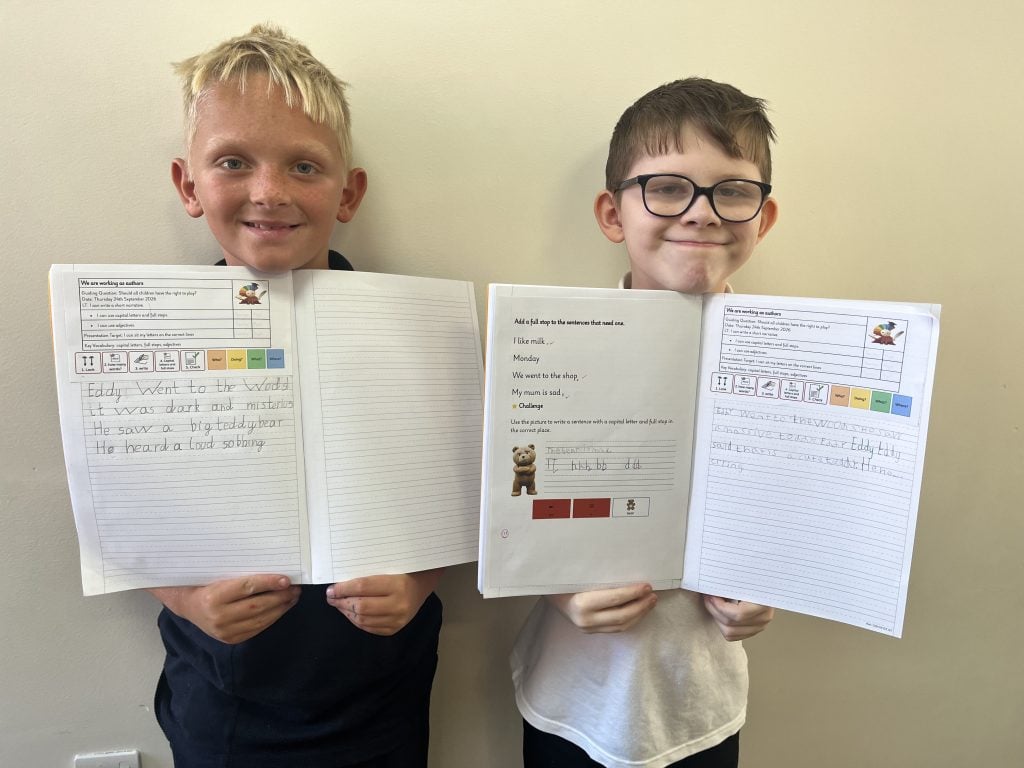
Today, Crew Godley began to bring their ideas from Where’s My Teddy? to life through our own narrative writing. We used our experience from the teddy hunt to help us imagine what it would be like to search for something special that had been lost.
We worked on writing our first plot point, thinking carefully about what happened first, next and finally. We focused on using capital letters and full stops correctly and added interesting adjectives to describe the characters and settings in our stories.
The children produced some beautiful work!
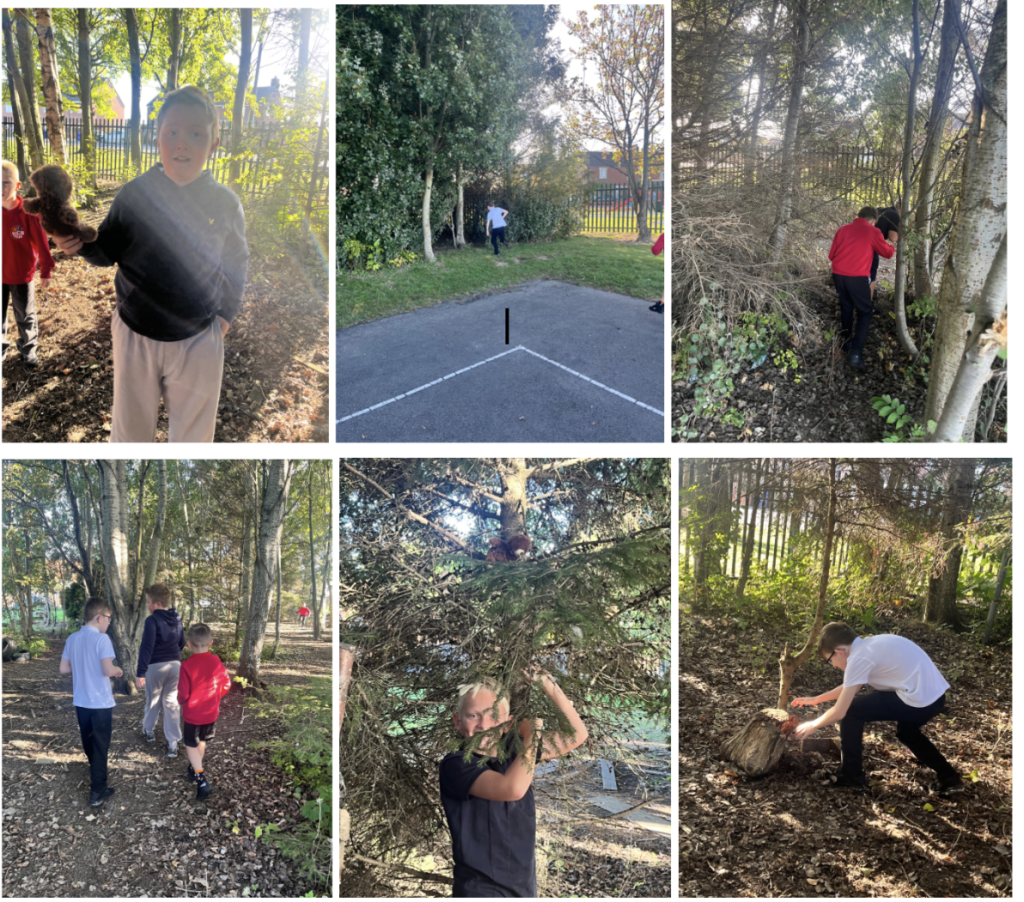
Today, Crew Godley were introduced to our new writing unit, inspired by the story Where’s My Teddy? by Jez Alborough. We explored how it might feel to lose something special and thought carefully about the different emotions Eddy experiences throughout the story.
We then headed outside into XP Outdoors for our very own teddy hunt! We worked together to search different areas, following clues and using our teamwork skills to help us find the missing teddy. Along the way, we discussed how we felt during our search and imagined how Eddy might have felt as he searched for his teddy in the woods.
This experience helped us to build our understanding of the story, develop our vocabulary around feelings and emotions, and gather ideas that we can use in our writing over the next week
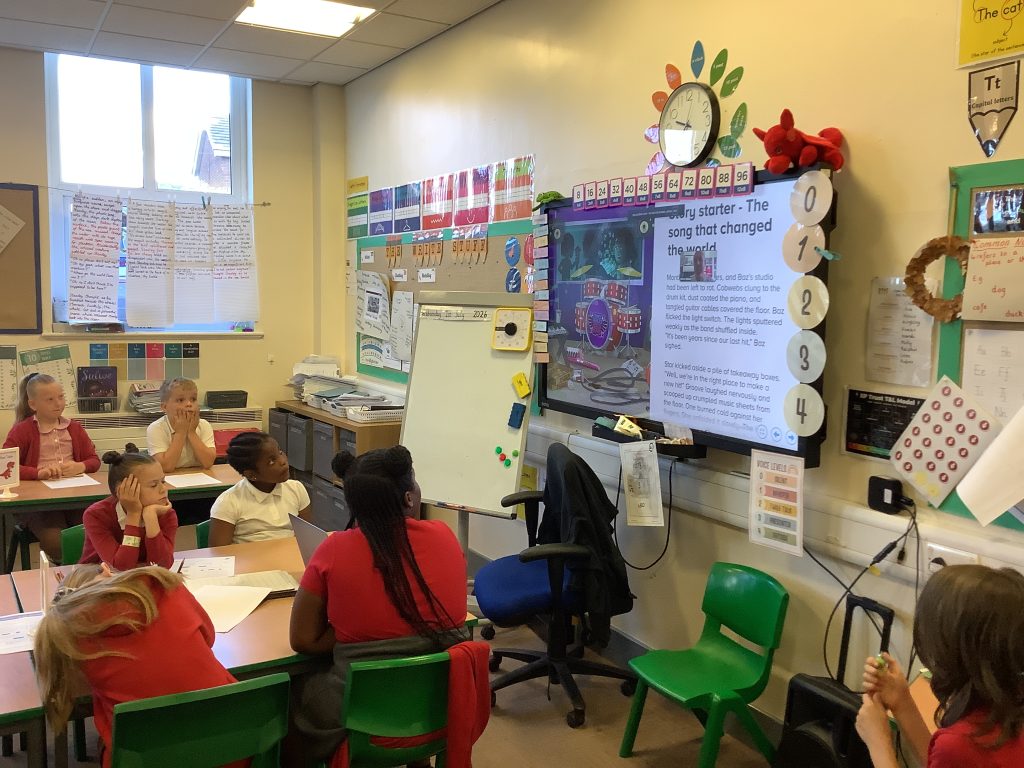
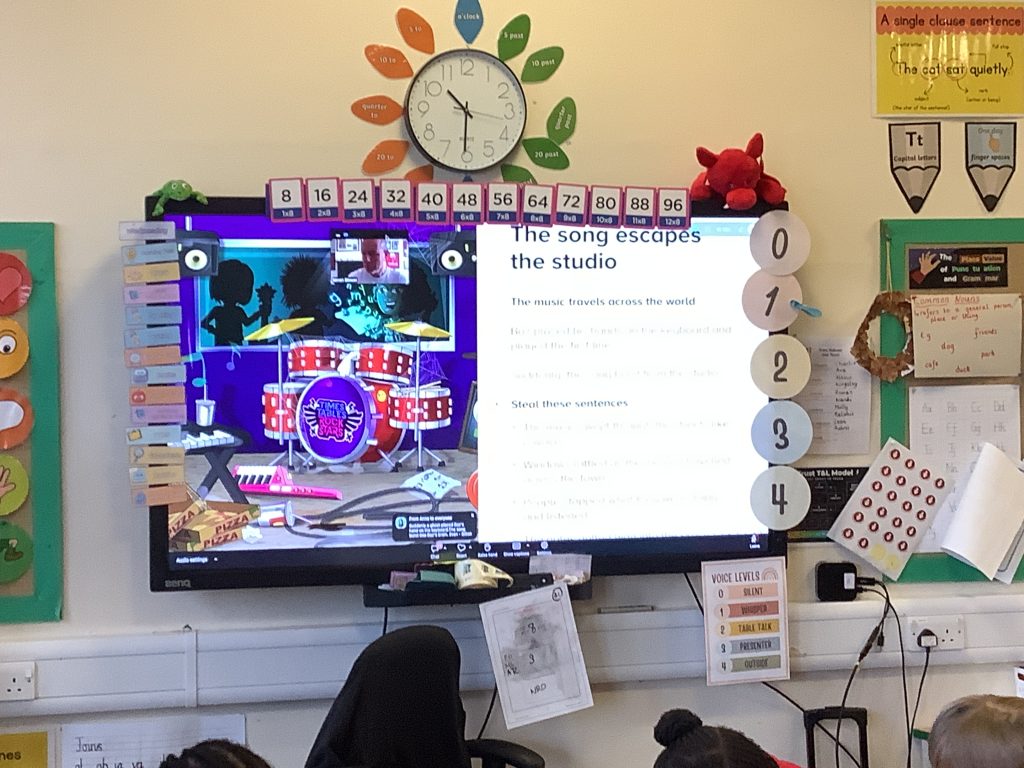
This morning we took part in a TTRS/Pobble writing lesson in which we used a picture stimulus to create a new story. The children were really engaged and wrote some fantastic stories. Some even stayed in at break to illustrate their books!
We have been researching endangered animals using one of our Expedition Anchor Texts, Red Alert! We have been gathering information to help us write an information text about what leads to extinction and how this can be prevented. We decided to focus on sea turtles but before that we loved learning about frogs, bears and many more endangered species!
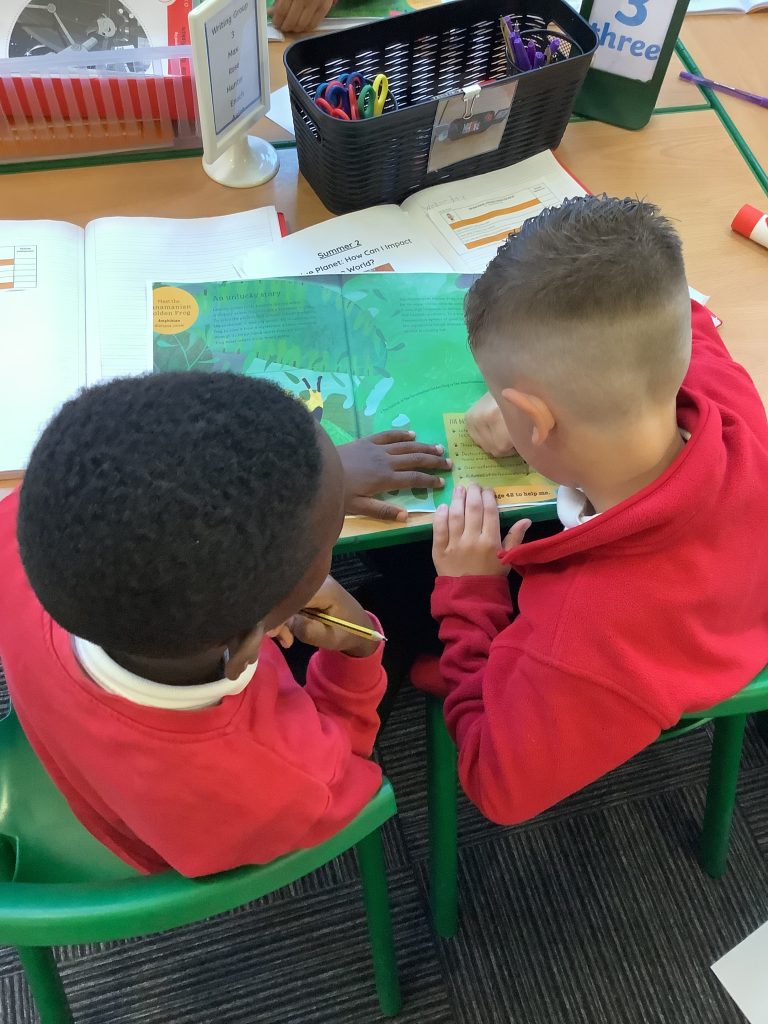
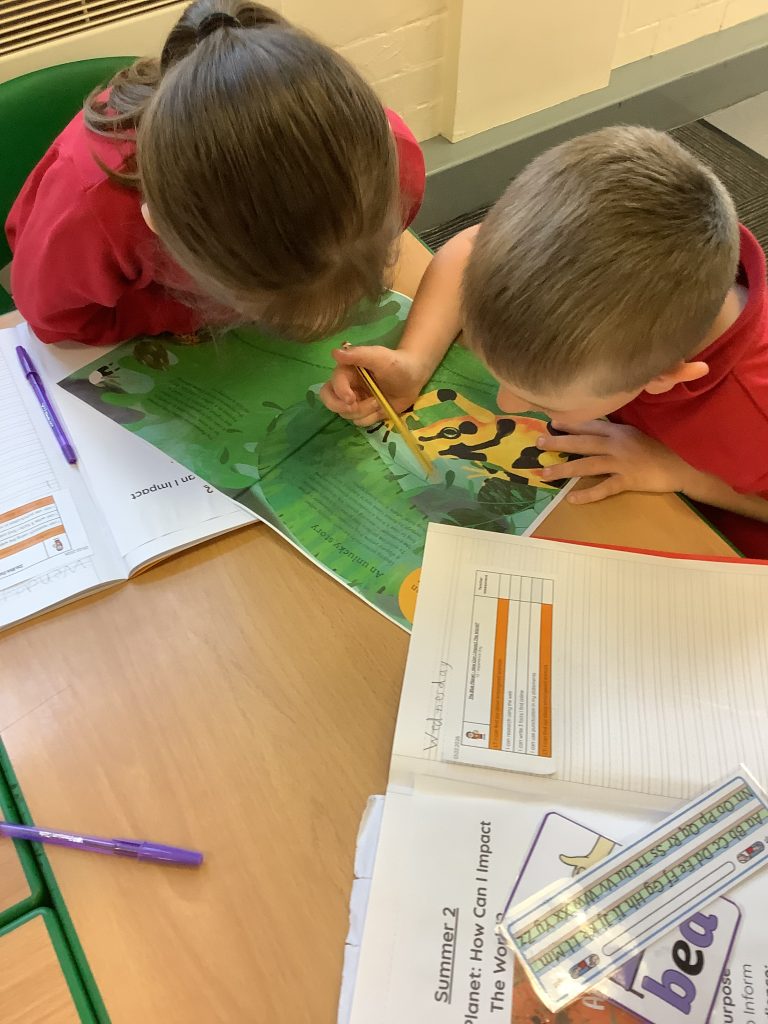
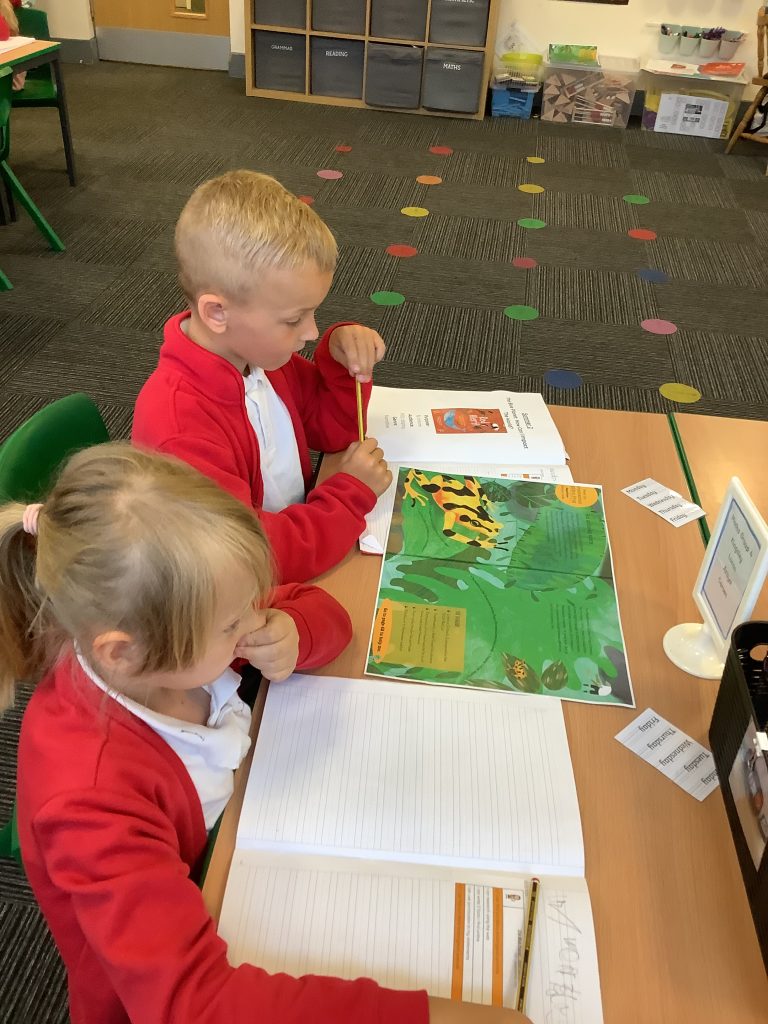
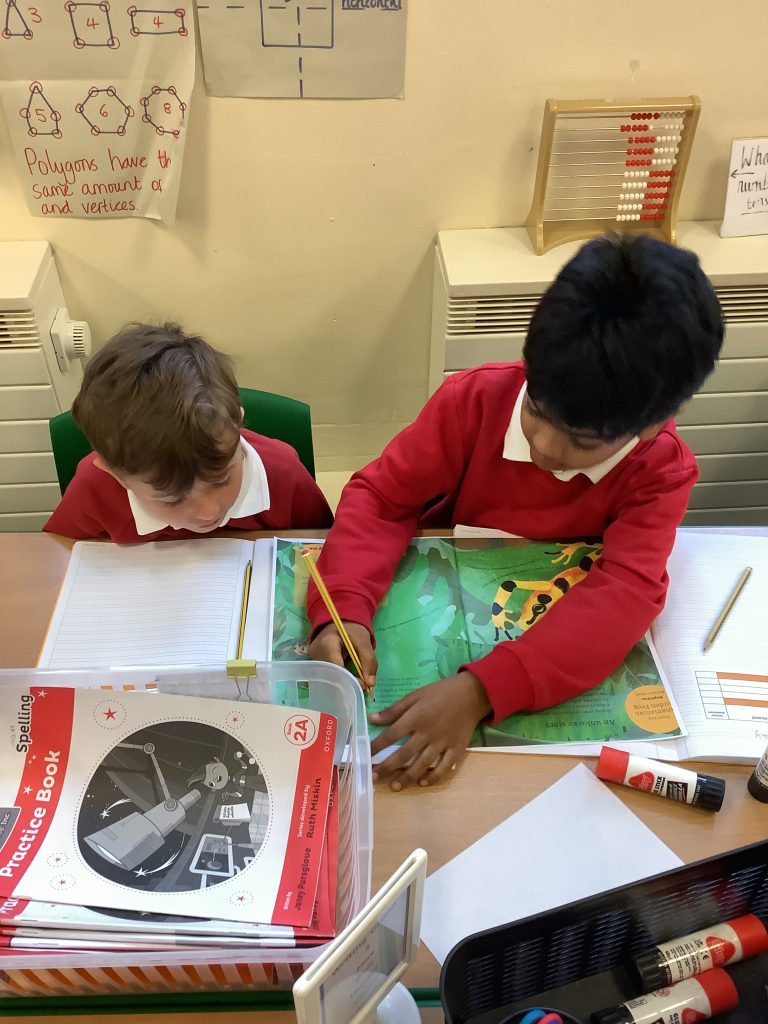
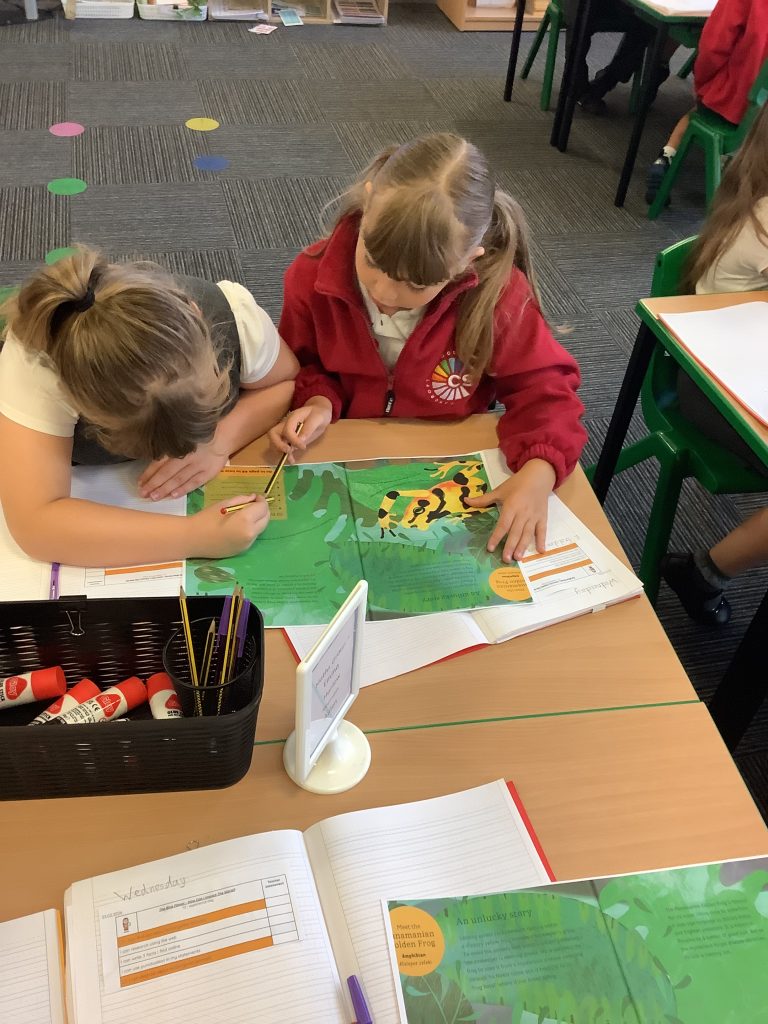
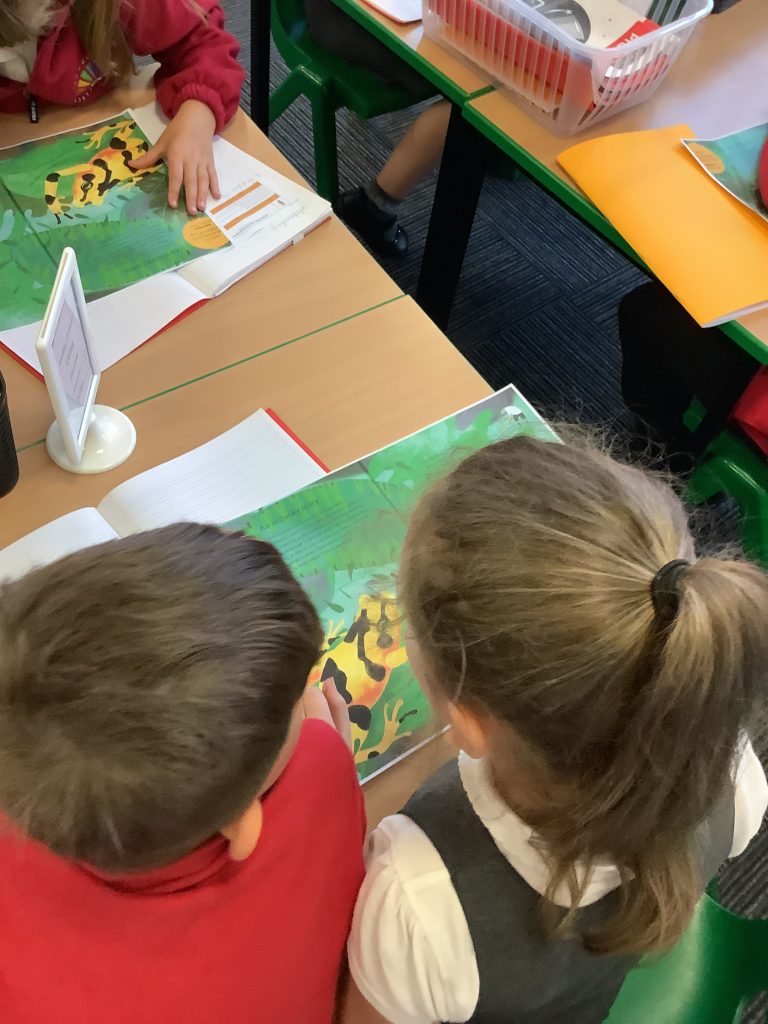
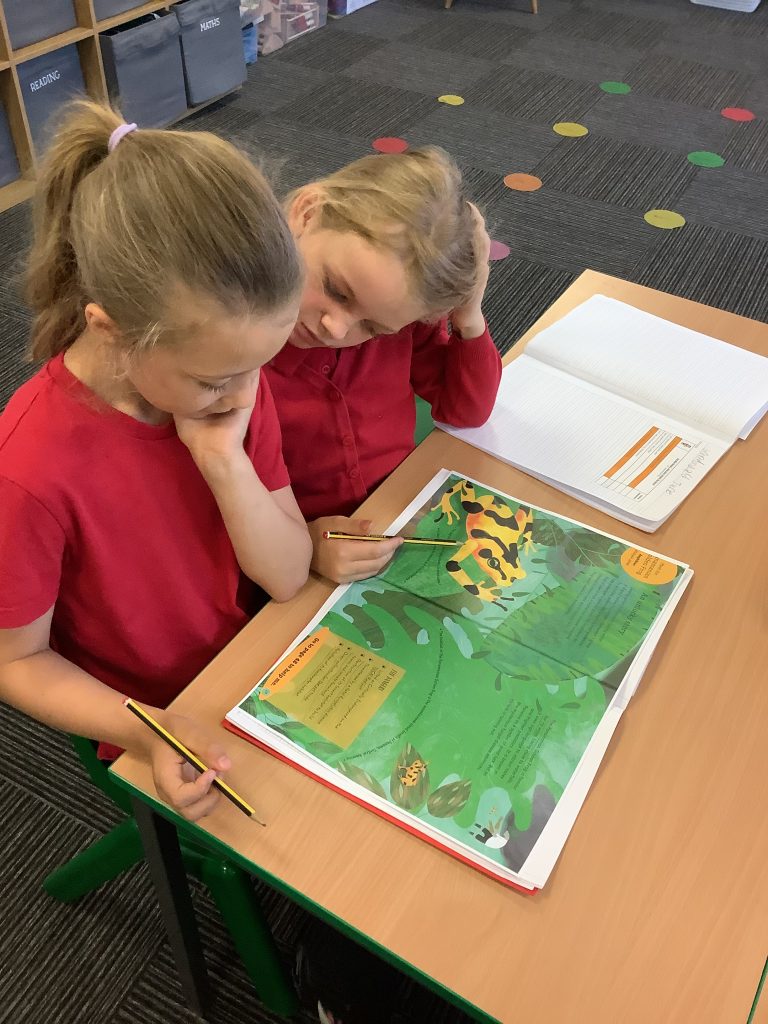
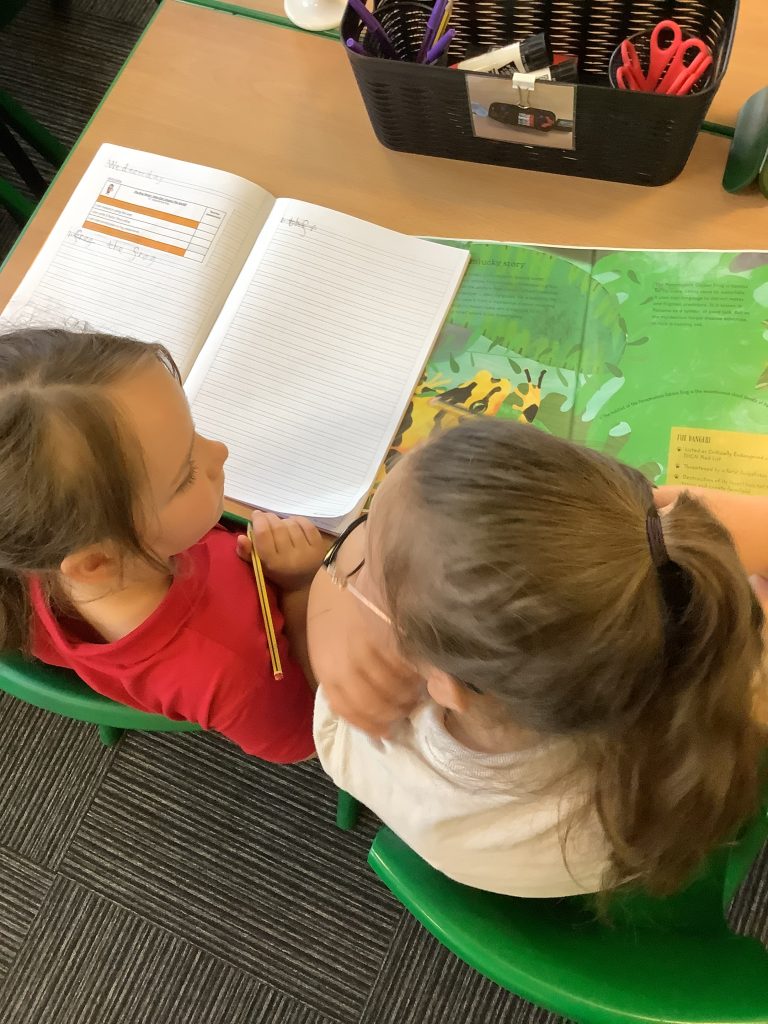
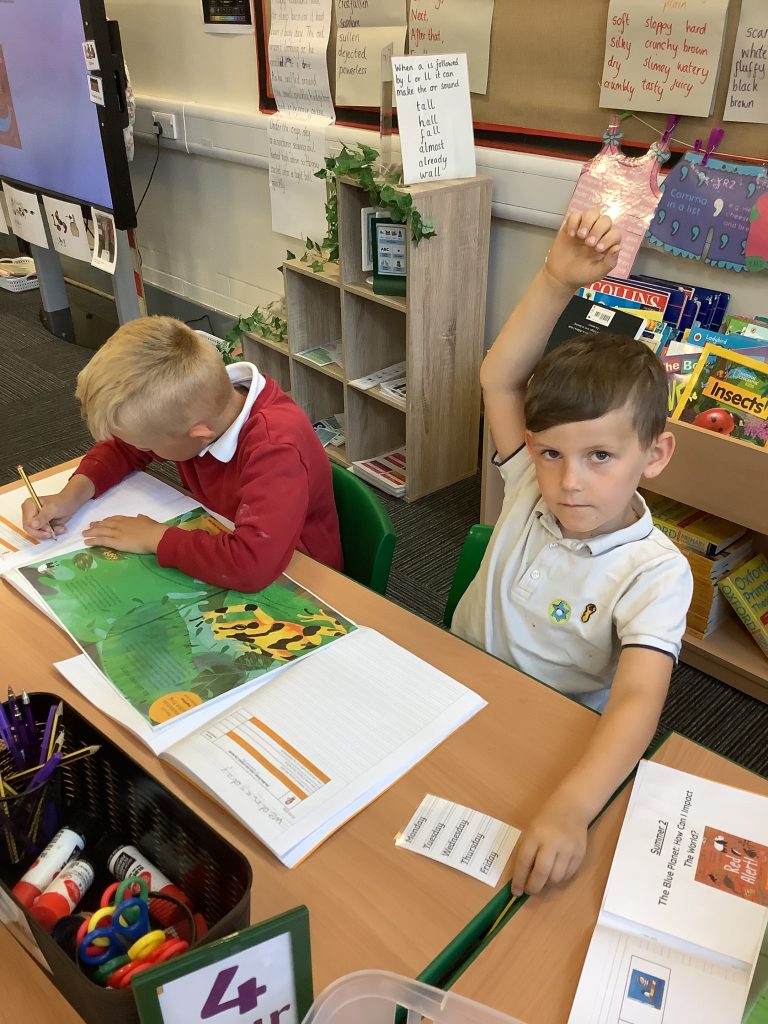
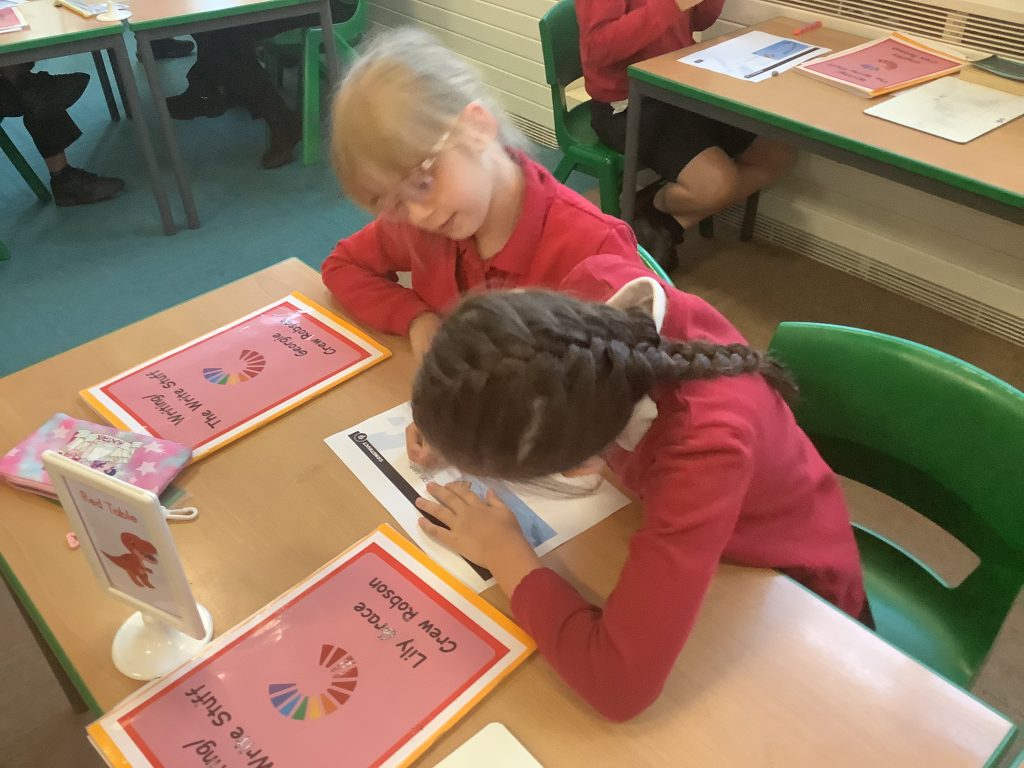
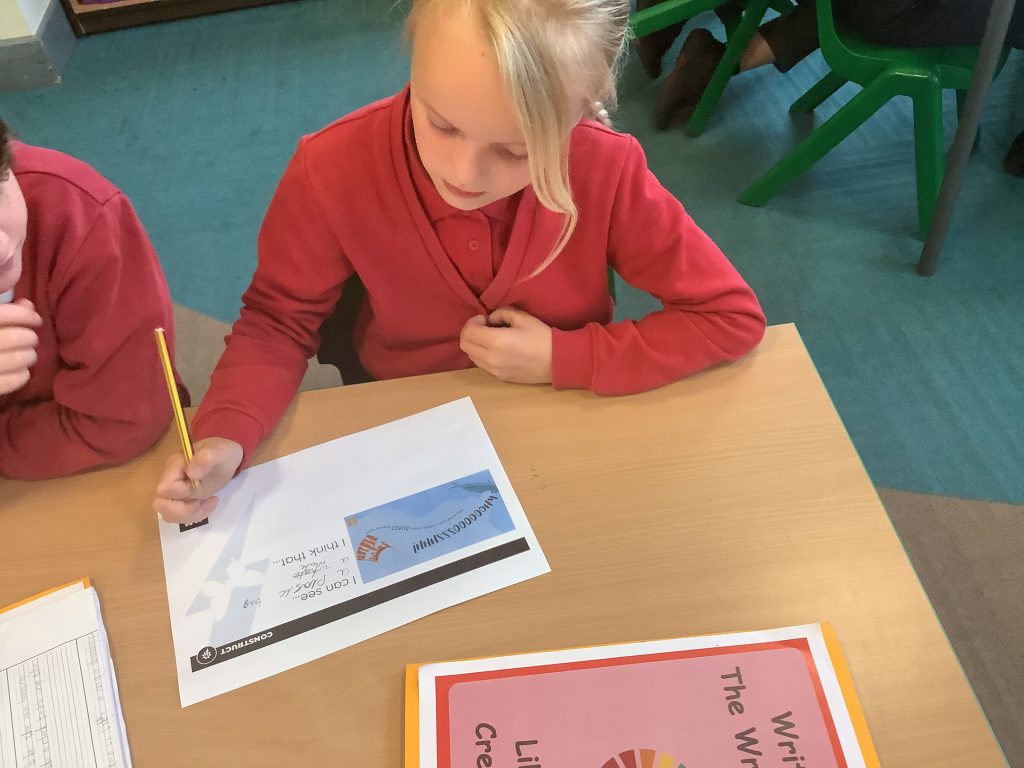
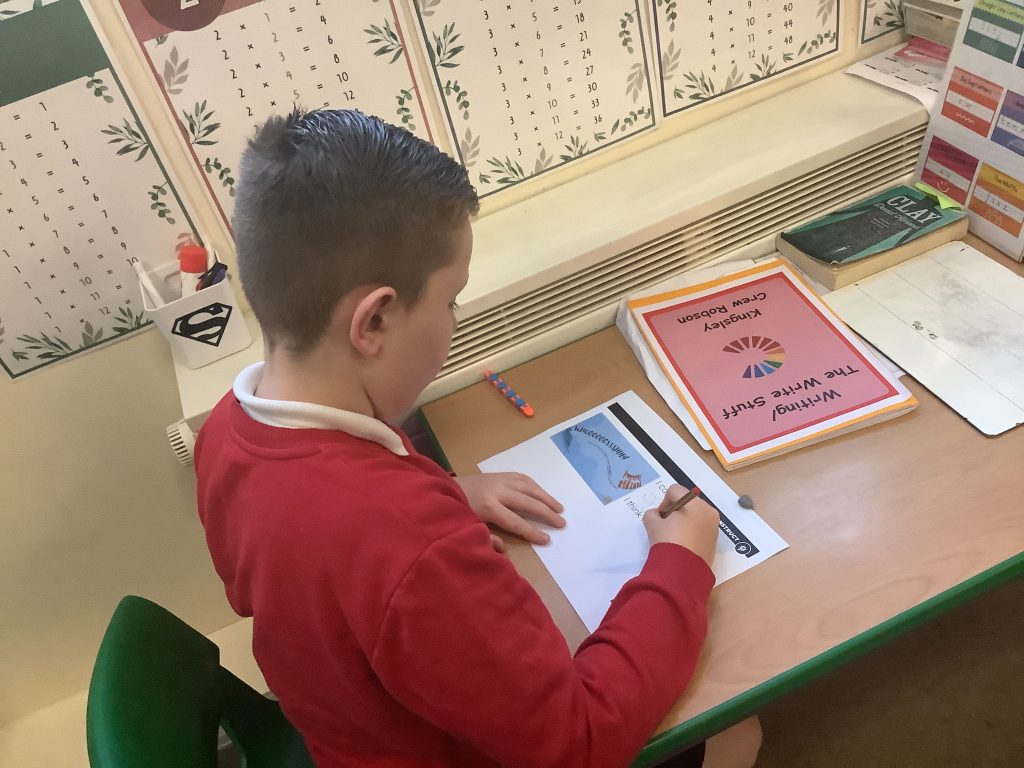
Today we began our new writing unit and made predictions about what we thought might happen in the story. A few eagle eyed children even thought they recognised the story! I can’t wait to see what they all produce this time!
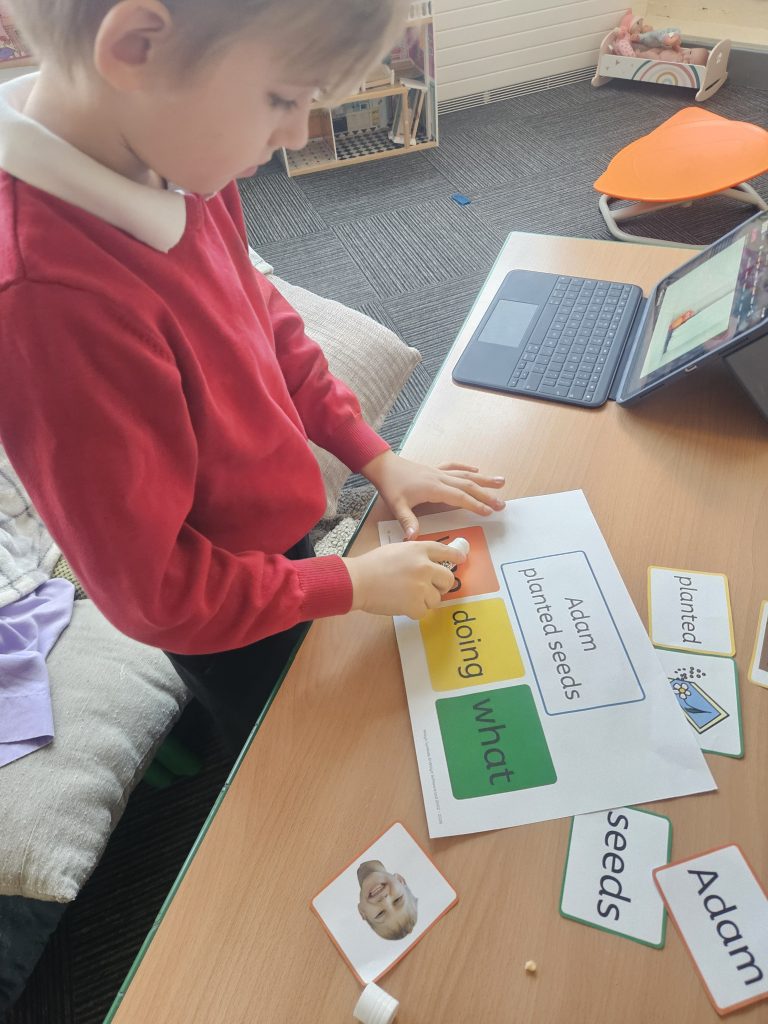
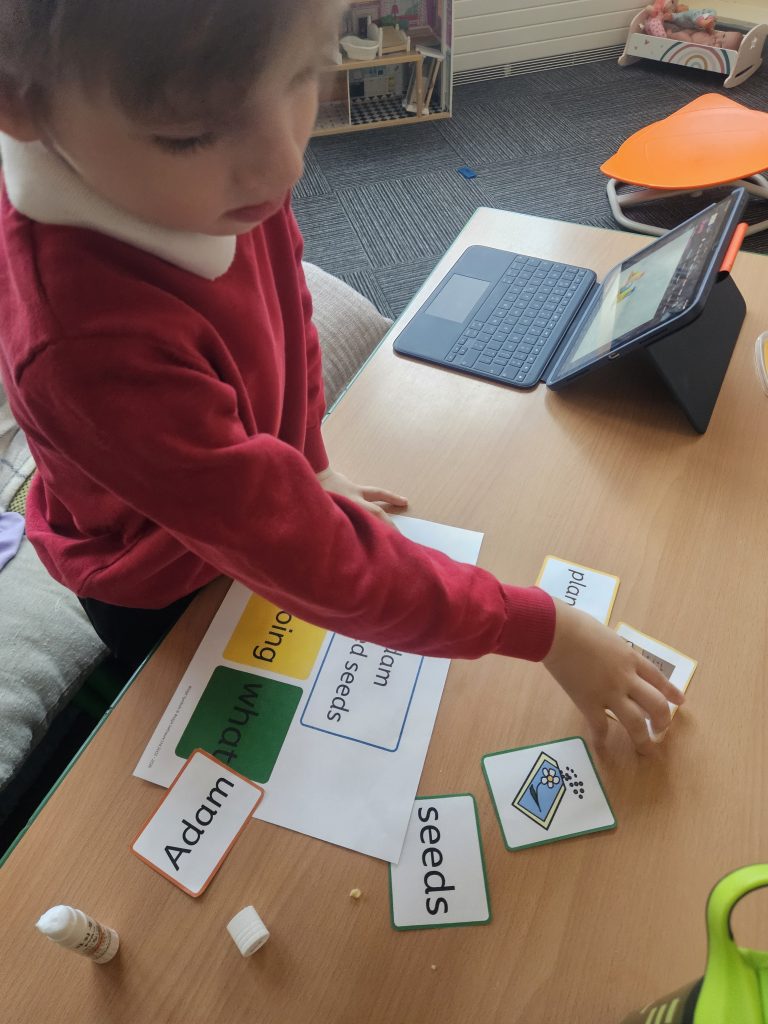
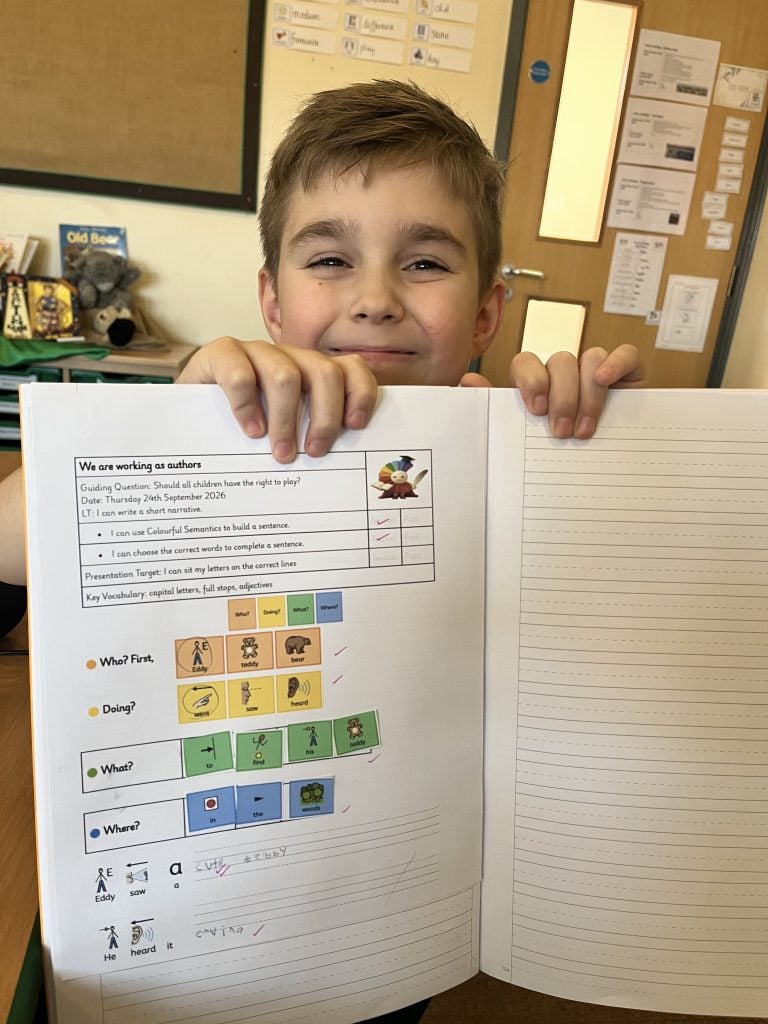
Today we used colourful semantics to talk about our activity. Colourful semantics is used for sentence building to help children understand how to make a sentence and the order we put our words and phrases in. The children first start with a “who, doing, what?” structure, which is then built upon depending on their understanding.
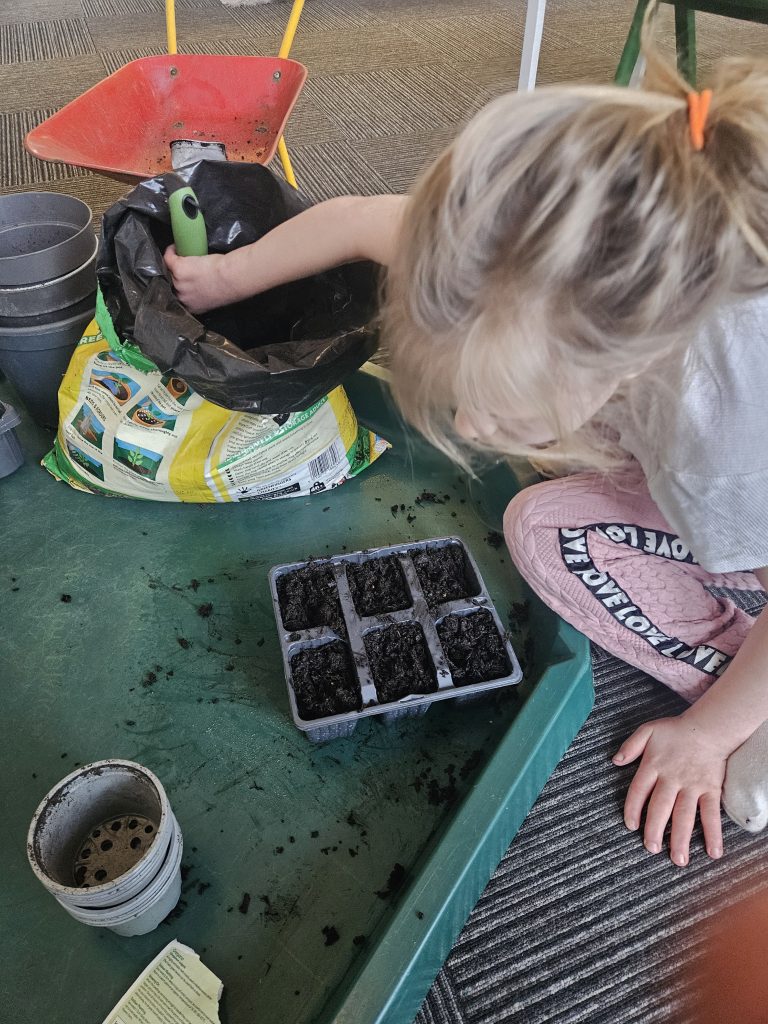
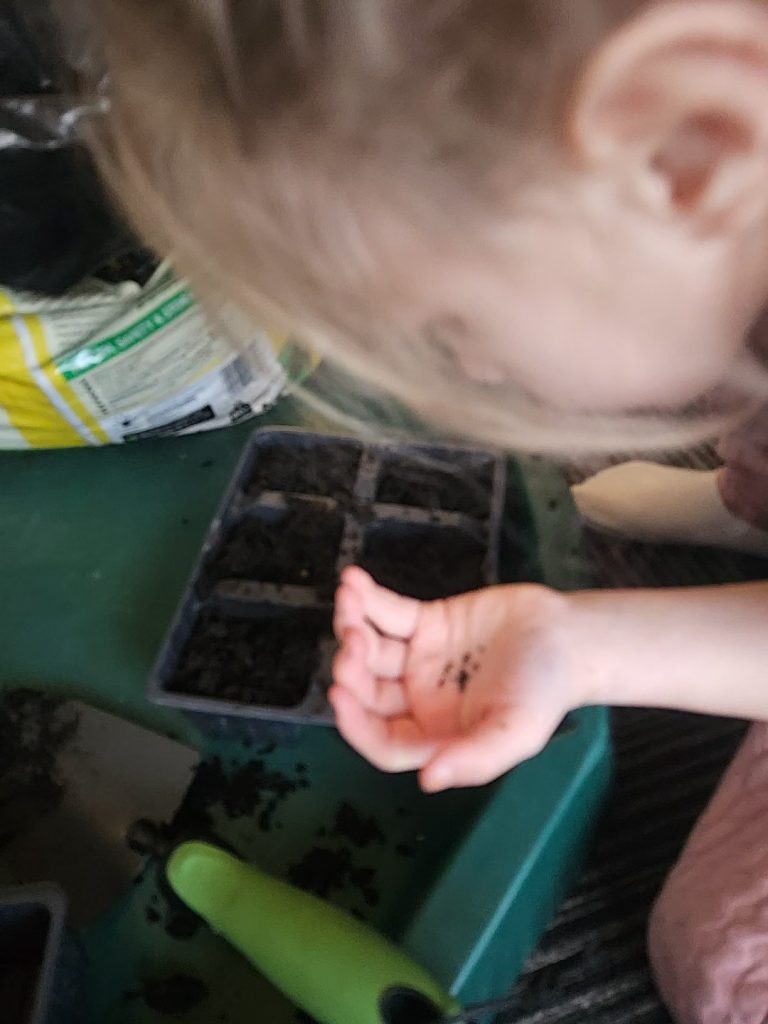
Today’s activity involved more planting, and today we planted thyme, basil, and oregano.