
Today, we have continued to work on how to use fronted adverbials. We worked together to identify the different types of fronted adverbials.
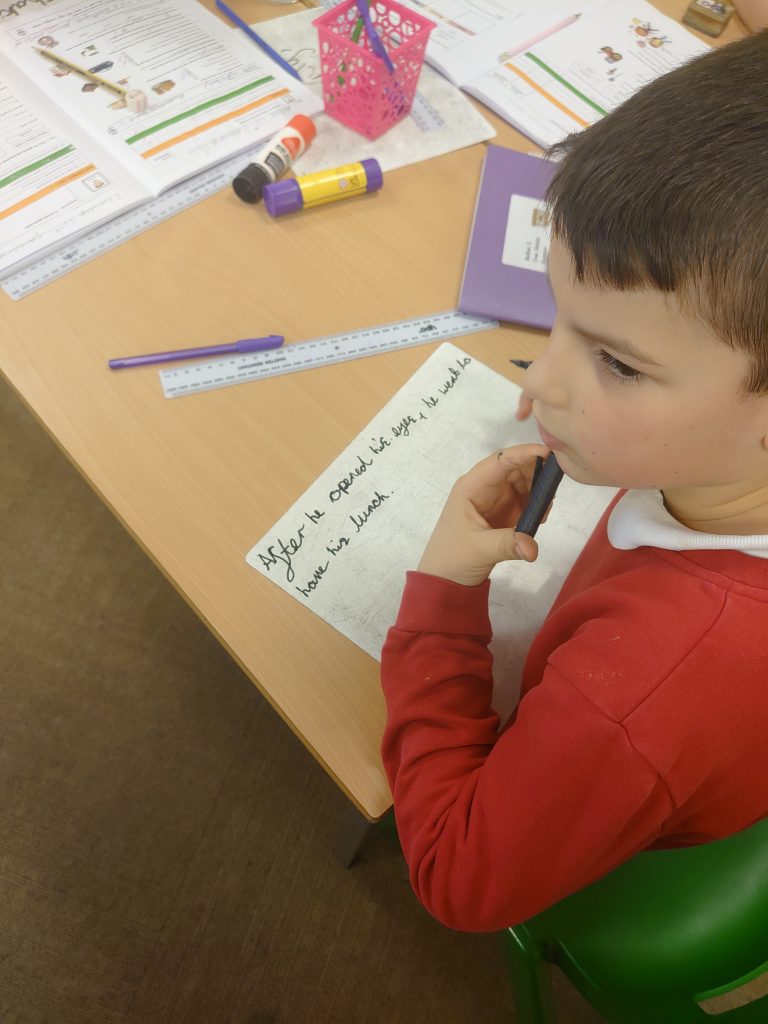
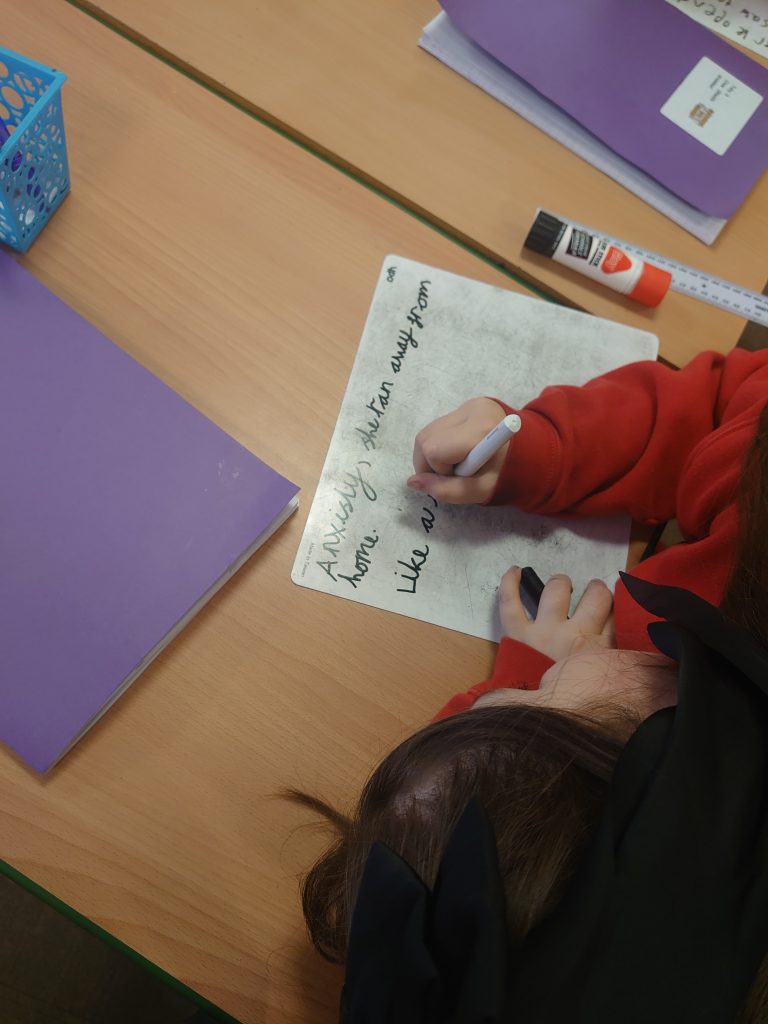
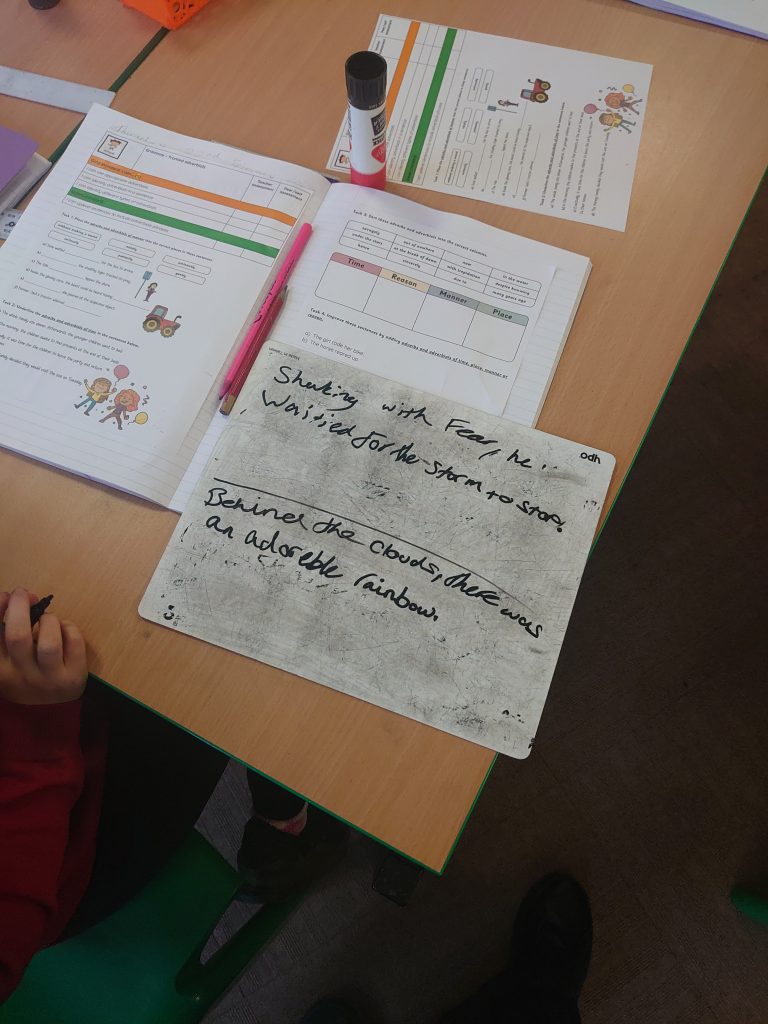
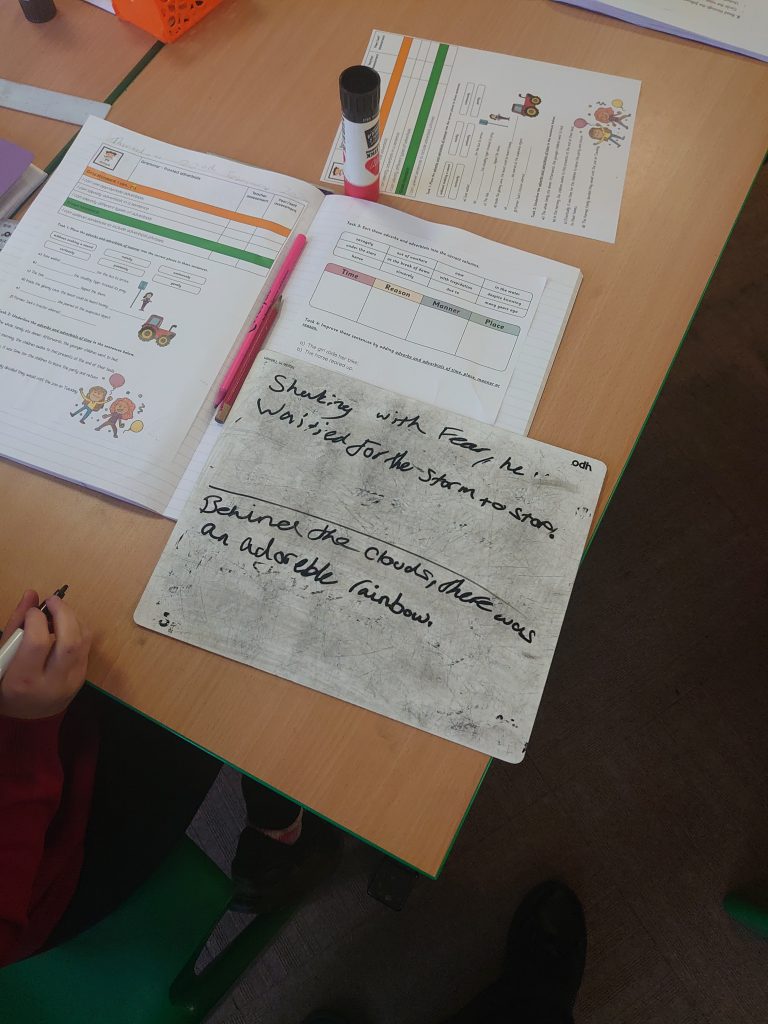
Today, we have continued to work on how to use fronted adverbials. We worked together to identify the different types of fronted adverbials.
Today, we had a practical session with subordinate conjunctions. Children were asked to rearranged the words to create a sentence that made sense with a subordinate clause. Once each group had completed their section they moved around the other sentences and worked together to move the subordinate clause either to the start or end of the sentence.


Before our writing grammar lesson yesterday, we played a game of 4 corners where children had to decide if a word was a noun, adverb, adjective or verb.


In grammar this afternoon, we looked at why headings and subheadings are used in nonfiction texts. We discussed how headings are used to tell you what the page is about and subheadings are used to tell you what the paragraph will be about. We then had a go at matching the paragraph to the correct subheading.


We worked in mini crews to put chunks of sentences together in order to create full sentences that included a subordinate clause (a clause that does not make sense on its own). The sentences we created were:
We discussed which part of these sentences was the main clause and which part was the subordinate. We also discussed whether our sentences could be put in a different order and still make sense.


In grammar, Crew Hamill learned all about determiners. To begin our lesson, we discussed the difference between vowels and consonants and identified this in mini crews. This helped us to decide which determiner to use before each of our vowels. We learned that if the word begins with a vowel (a, e, i, o, u) then we must use an as a determiner and if it begins with a consonant (any of the other 21 letters) we must use a. We also learned about exceptions to this rule – e.g. hour. Even though this starts with a consonant, it actually makes a vowel sound so we would have to use an.


Today we discussed and explored the present perfect tense and the simple past tense.


This week is our grammar focus morning tasks. We used this time to consolidate previous learning.


On Friday afternoon, we were learning about different sentence types such as simple, compound and complex. This allowed us to build of our learning of coordinating and subordinating conjunctions.
This afternoon, we completed our grammar lesson about subordinate Clauses. We tried to sing along with the song to help us remember them before completing our tasks. We’ve been ensuring we are secure with our conjunctions before moving on to sentence types.